
Skin aging is a natural process that actually begins around the mid-20s. At that point, some natural processes in the skin slowly change. And yet, we influence it more than many people think. Approximately 80% of all visible signs of aging are caused by external factors, especially sun, environmental stress, and lifestyle.
The exciting question therefore is: How can I help my skin stay healthy, resilient, and balanced for as long as possible? That is precisely the idea behind Healthy Aging.
Skin aging: What happens in the skin and how you can prevent it
Skin aging is a natural process. Our skin constantly renews itself, protecting us from UV radiation, pathogens, temperature fluctuations, and moisture loss. Over the years, this impressive protective function slowly changes.
These include, among others:
- collagen production decreases,
- elastin fibers lose elasticity,
- the skin produces less natural hyaluronic acid,
- the skin barrier regenerates more slowly,
- and the production of skin lipids decreases.
None of these changes happen overnight. They develop over many years.
What happens in your skin during skin aging
The skin slowly loses firmness
Collagen is one of the most important structural proteins in the skin. It ensures that it remains stable and resilient. With increasing age, the body produces less collagen. As a result, the skin gradually appears finer, thinner, and less firm. Elastin, the substance that gives the skin its elasticity, also changes over time.
The skin stores less moisture
In addition to collagen, the body's own hyaluronic acid also slowly decreases. As a result, the skin cannot bind water as well. Many of us first notice this through feelings of tightness or fine dehydration lines. These often do not arise because the skin is suddenly "old," but because it lacks moisture.
The skin barrier changes
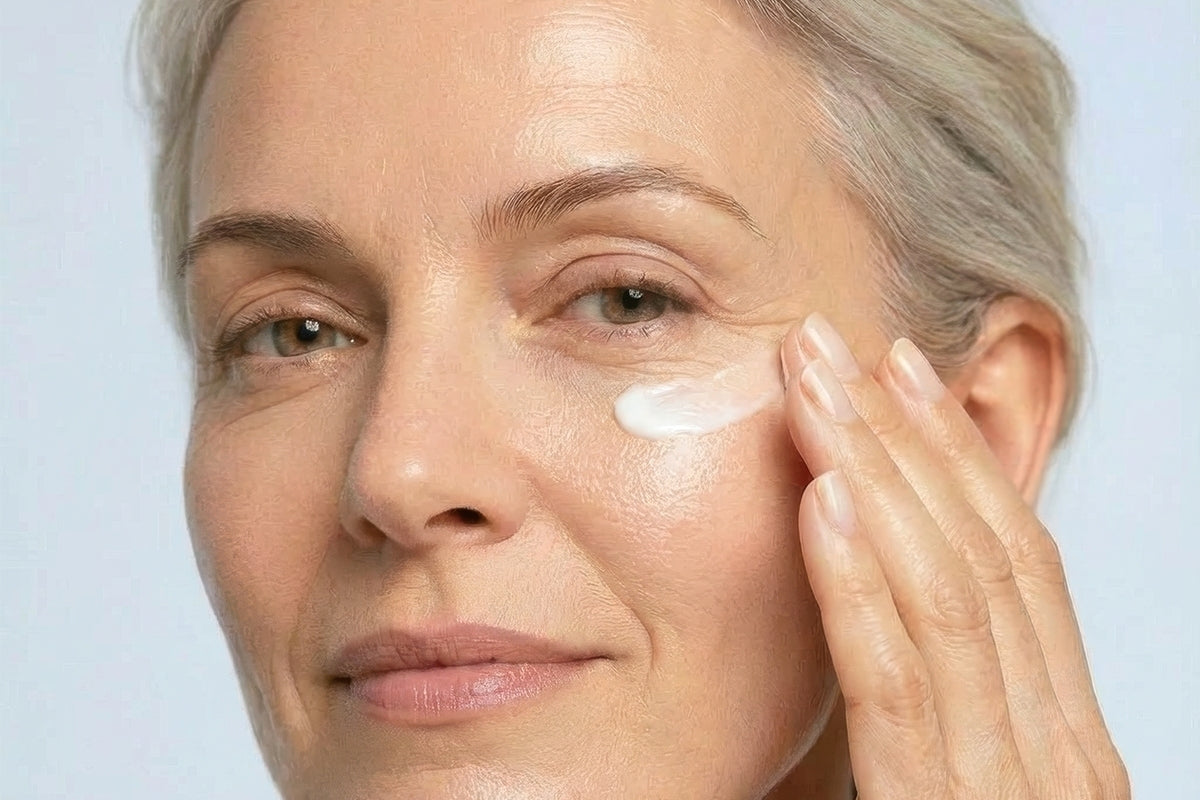
Over the years, the skin produces fewer ceramides, cholesterol, and free fatty acids. These lipids form an important part of the skin barrier. If the barrier becomes more permeable, moisture evaporates faster and the skin reacts more sensitively to external influences.
That's why barrier care becomes increasingly important with age.
What role does the sun play?
When dermatologists talk about premature skin aging, one term almost always comes up: UV radiation.
It is one of the most important external factors of skin aging. Over many years, UV light can, among other things:
- break down collagen fibers,
- create free radicals,
- promote pigment spots,
- and additionally stress the skin barrier.
Therefore, daily sun protection is considered one of the most effective measures to support the skin in the long term.
Healthy Aging: How to prevent it specifically
For a long time, skincare was primarily about fighting wrinkles.
Today, the view on healthy skin is changing. Healthy Aging does not mean stopping natural aging processes. It means supporting the skin where it changes. This includes a stable skin barrier, sufficient hydration, consistent sun protection, and carefully selected active ingredients, if they match your skin's needs.
The focus is not on as many products as possible, but on a skincare routine that supports the skin in the long term.
What can you do yourself?
A good healthy aging routine doesn't have to be complicated; often a few well-chosen habits are enough:
- Daily sun protection: The most effective anti-aging measure of all.
- Moisturizing care: Hyaluronic acid, plant oils, and antioxidants help to hydrate the skin.
- Gentle exfoliants: Remove dead cells and promote cell renewal.
- Healthy lifestyle: Sufficient sleep, exercise, and a balanced diet support the skin from within.
Skin aging cannot be stopped, but it can be significantly slowed down. With a conscious lifestyle and care tailored to your needs, your skin will remain radiant, smooth, and vital for longer.