

Radiant skin is considered by many to be the epitome of healthy skin. On social media, "glow" is often associated with elaborate routines, highly concentrated active ingredients, or the famous "glass skin" effect. However, a natural glow often begins in a completely different place: with a healthy skin barrier.
What does "Glow" actually mean?
Glow is not a medical term. Rather, it describes the impression of skin that looks fresh, even, and well-hydrated.
Interestingly, this impression is not created by a single active ingredient, but by the interplay of various factors:
- a balanced moisture level,
- a smooth skin surface,
- an intact skin barrier,
- even light reflection.
Glow is therefore less a short-term effect and more a visible sign that the skin is in good balance.
Why light reflects differently on healthy skin
Our skin doesn't reflect light randomly. If the skin's surface is smooth and well-hydrated, incident light is reflected evenly. This makes the complexion appear fresher and more radiant.
If, on the other hand, the skin loses moisture or its barrier is weakened, its surface changes.
It often appears rougher, more uneven, duller, and less uniform. Light is scattered more, and the natural glow is lost.
The skin barrier: The foundation for radiance
The skin barrier is the outermost protective layer of our skin. Very simply described, it consists of skin cells held together by lipids such as ceramides, cholesterol, and free fatty acids.
Its most important task is to retain moisture in the skin, reduce water loss, keep irritants out, and make the skin resilient.
If this barrier is stable, the skin can better regulate its natural water balance. This contributes significantly to a fresh complexion.
Why moisture alone is often not enough
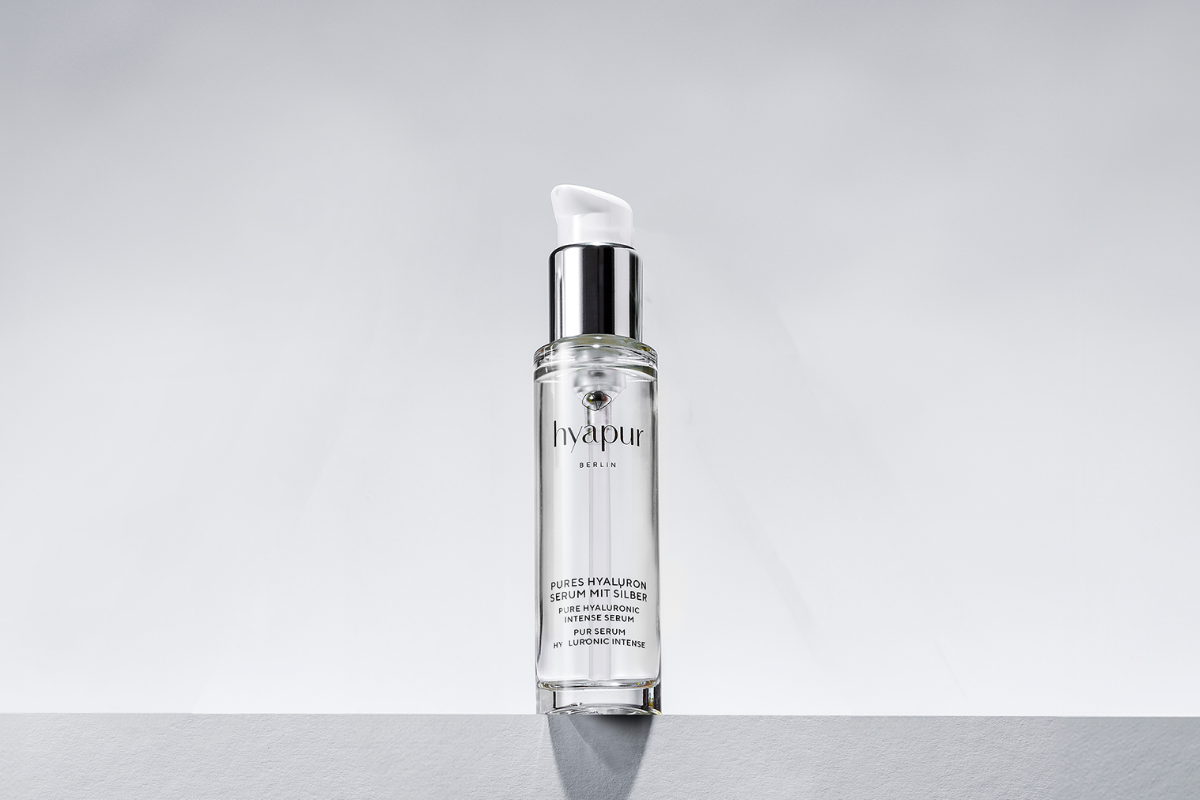
Many people suffering from dull skin first reach for a hyaluronic serum. This is quite understandable, as hyaluronic acid can bind large amounts of water and intensely hydrate the upper layers of the skin. But moisture is only part of the story. If the skin cannot retain this water, some of it is lost again. This is a possible result, especially in dry ambient air or with a weakened skin barrier.
Therefore, dermatologists often recommend combining moisturizers like hyaluronic serums with barrier-strengthening care.
Only the interplay of hydration and lipids creates the basis for long-lasting suppleness.
Why glow often diminishes with age
Many people notice from about the age of 40 that their skin looks less radiant. This is no coincidence. With increasing age, various processes change simultaneously:
- The skin produces fewer of its own lipids.
- Natural hyaluronic acid slowly decreases.
- Sebum production decreases.
- The skin renews itself more slowly.
These changes cause the skin to appear drier and reflect light less evenly. Glow does not disappear because the skin "gets older," but because its biological conditions change.
The good news: Many of these processes can be meaningfully supported by adapted care.
Healthy Aging no longer means glow at all costs
In the context of Healthy Aging, it's not about chasing every trend or making the skin artificially shiny.
Rather, the focus is on the question: What does the skin need to stay healthy and balanced in the long term?
This primarily includes:
- gentle cleansing,
- sufficient moisture,
- a stable skin barrier,
- daily sun protection,
- targeted active ingredients.
Glow does not become the actual goal. Rather, it is a visible side effect of skin whose natural functions are well supported.
Why less sometimes radiates more
In times of elaborate skincare routines, this thought seems almost surprising. But many people find that their skin looks calmer and more radiant when they consciously simplify their care.
Fewer changing products, less over-care, and more consistency can help relieve the skin barrier. Because the skin also loves routine, and not every new trend improves its function. Sometimes it's enough to give it time.
Glow is not created in one step
Natural glow usually doesn't develop overnight. It is the result of many small factors working together:
- well-hydrated skin,
- an intact barrier,
- sufficient lipids,
- protection from UV radiation,
- a regular care routine.
Those who strengthen these foundations create the best conditions for healthy-looking skin. Regardless of age.