
Hardly any term has changed skincare in recent years as much as "Healthy Aging". While the focus used to be primarily on fighting wrinkles, today a different question is increasingly coming to the fore: How can we support our skin to remain healthy, resilient, and balanced for as long as possible?
Healthy Aging does not mean stopping the natural aging process. Rather, it is about supporting the skin in every phase of life, where it currently is biologically. And therein lies an important shift in perspective.
Age is not a skin disease
Anyone who looks at skincare advertisements can easily get the impression that wrinkles are a problem that needs to be eliminated as quickly as possible.
However, skin aging is not a flaw or a disease. It is a natural, biological process that accompanies every human being.
Over the years, numerous skin structures change very gradually:
- collagen production slowly decreases,
- natural hyaluronic acid and elastin content decline,
- sebum production changes,
- the skin barrier becomes more permeable,
- and even bones experience abrasion.
These changes begin long before they become visible and occur over many years. Healthy Aging therefore does not mean fighting against these natural processes, but understanding them and supporting the skin accordingly.
Why skin changes throughout life
Our skin is an amazingly active organ. It continuously renews itself, repairs minor damage, and protects us daily from UV radiation, pollutants, and pathogens.
However, with increasing age, this system works a little slower. Regeneration takes more time, the production of important skin components decreases, and external influences also leave their marks. UV radiation plays a central role in this.
Many visible signs of skin aging are not caused solely by biological aging, but by habits such as smoking or sugar consumption, as well as the sum of sun exposure our skin has experienced throughout life.
Therefore, consistent sun protection remains one of the most effective measures for long-term healthy skin.
Healthy Aging begins with skin function
Modern skincare no longer views skin exclusively from a cosmetic perspective. Instead, its function is at the forefront.
Healthy skin performs numerous tasks simultaneously:
- It retains moisture.
- It protects against external influences.
- It supports the skin microbiome.
- It regulates inflammatory processes.
- It continuously renews itself.
Since all these functions are closely related to the skin barrier, Healthy Aging does not begin with as many active ingredients as possible, but with a stable foundation. A well-cared-for skin barrier helps the skin remain more resilient and active ingredients are better tolerated.
Why moisture is more important than many think
With increasing age, not only does collagen synthesis slowly decrease. The skin's ability to store water also changes. It produces fewer natural moisturizing factors (NMF) and less hyaluronic acid. The result is often a feeling of tightness or dry skin.
Moisture is therefore one of the most important building blocks of modern skincare. Humectants such as hyaluronic acid or glycerin help bind water in the upper layers of the skin.
To ensure this moisture is retained for as long as possible, it is then recommended to use a product that supports the skin barrier and reduces water loss. Hydration and barrier protection therefore work hand in hand.
Fewer products, more strategy
Healthy Aging does not mean combining as many serums as possible. On the contrary. Many users observe that mature skin in particular can react more sensitively to over-treatment.
Too many active ingredients can unnecessarily irritate the skin. Therefore, the Healthy Aging concept increasingly relies on a clear structure:
- gentle cleansing,
- sufficient moisture,
- support of the skin barrier,
- daily sun protection,
- targeted active ingredients as needed.
The success of a skincare routine is not determined by the number of products, but by how well they suit the individual needs of the skin.
Which "anti-aging active ingredients" are also well suited for Healthy Aging?
Healthy Aging does not mean foregoing effective ingredients. Some "anti-aging active ingredients" are very well scientifically researched and can also make a valuable contribution to Healthy Aging.
These include:
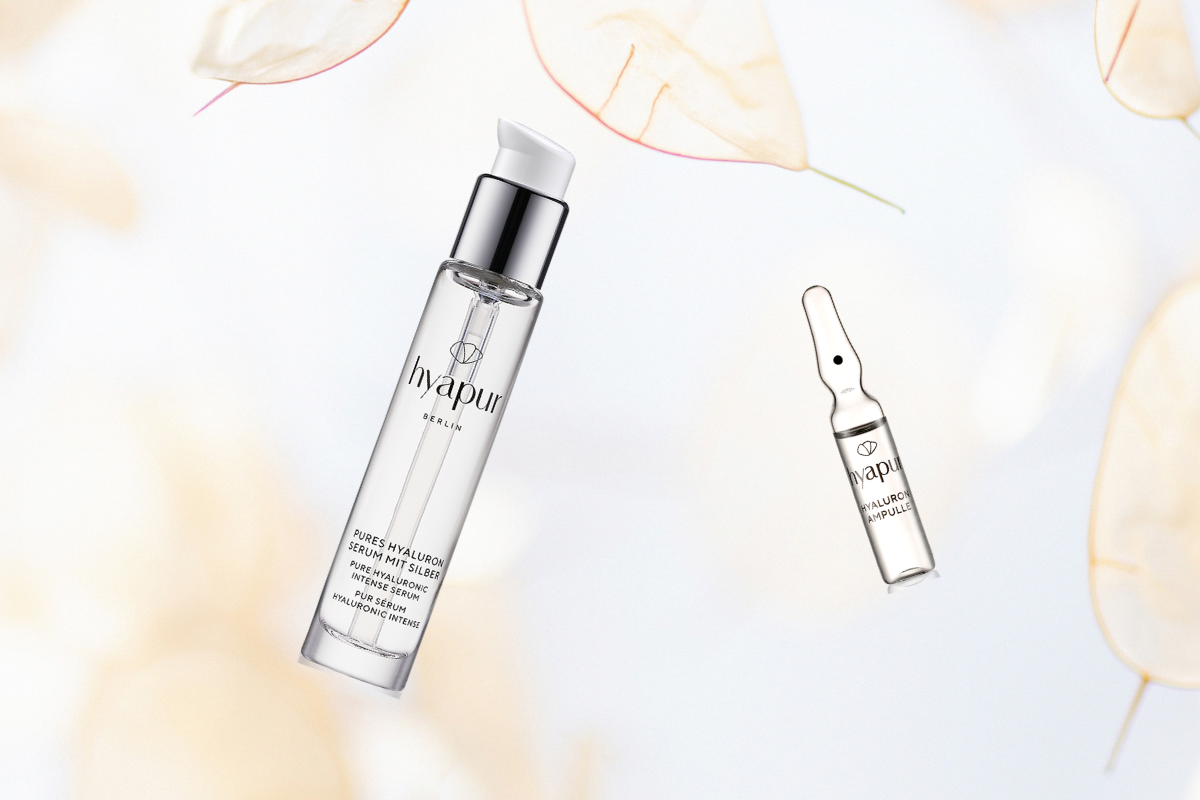
Hyaluronic acid
It supports skin hydration and contributes to a smooth skin feeling.
Niacinamide
It can strengthen the skin barrier, reduce redness, and even out the complexion.
Retinoids
Retinoids are among the best-researched anti-aging active ingredients and can support collagen production. Especially for sensitive skin, however, a slow introduction is recommended.
Vitamin C
As an antioxidant, Vitamin C helps protect the skin from oxidative stress and supports collagen formation.
Sun protection
No cosmetic active ingredient can completely compensate for the effects of daily UV radiation. Therefore, sun protection remains one of the most important measures for Healthy Aging.
Healthy Aging does not start in the bathroom cabinet
As important as skincare is, it is only part of the whole. Our lifestyle also influences the skin. Sufficient sleep supports nightly regeneration, a balanced diet provides important building blocks for skin, connective tissue, and collagen. Regular exercise improves blood circulation, stress management can help reduce inflammatory processes.
Healthy Aging is therefore always more than the choice of individual products, but describes a holistic approach to the skin and one's own body.
Why our view of skincare is changing
The biggest difference between Healthy Aging and classic anti-aging is not so much in the products, but in the attitude.
While anti-aging often suggests that aging is something that must be prevented, Healthy Aging views aging as a natural part of life. The goal is not perfection, but skin that feels healthy, balanced, and comfortable. And sometimes that even means doing less.