

Hyaluronic acid serums are among the most popular active ingredient products in modern skincare. The reason for this is simple: our skin needs moisture to remain supple, smooth, and resilient.
Hyaluronic acid is one of the body's own substances and is found, among other places, in our skin, connective tissue, and joints. There, it performs an important task: it can bind large amounts of water and helps to keep the tissue hydrated.
However, with increasing age, the natural composition of the skin changes. Among other things, the amount of the body's own hyaluronic acid decreases. This can make the skin appear drier and fine dehydration lines can become more visible.
How a Hyaluronic Acid Serum Works on the Skin
A hyaluronic acid serum specifically provides the skin with moisture. Hyaluronic acid is one of the so-called Natural Moisturizing Factors (NMF). It can bind water and thus supports a plumper, smoother complexion.
This can manifest as:
- a more pleasant skin feeling
- more suppleness
- less tightness for dry skin
- a fresher-looking complexion
It is important to note: hyaluronic acid does not replace a healthy skin barrier. It provides moisture. The skin barrier then helps to retain this moisture in the skin.
Application: How to Get the Most Out of Your Serum
But what exactly is behind the effect? And why do hyaluronic acid serums sometimes differ so much in their results? The answer lies mainly in three factors:
- Molecular size
- Concentration
- Quality
1. The Role of Molecular Size
Hyaluronic acid is not all the same. It comes in different molecular sizes, each having a different effect on the skin:
High-molecular Hyaluronic Acid
The molecules of high-molecular hyaluronic acid are relatively large, which is why they remain on the skin's surface. There, they form a moisturizing film that immediately makes the skin appear smoother. The effect is visible and noticeable, but rather short-term.
Low-molecular Hyaluronic Acid
In low-molecular hyaluronic acid, the molecules are much smaller, which allows them to be absorbed into the skin. There, they bind moisture in the lower skin layers and provide more firmness and elasticity in the long term.
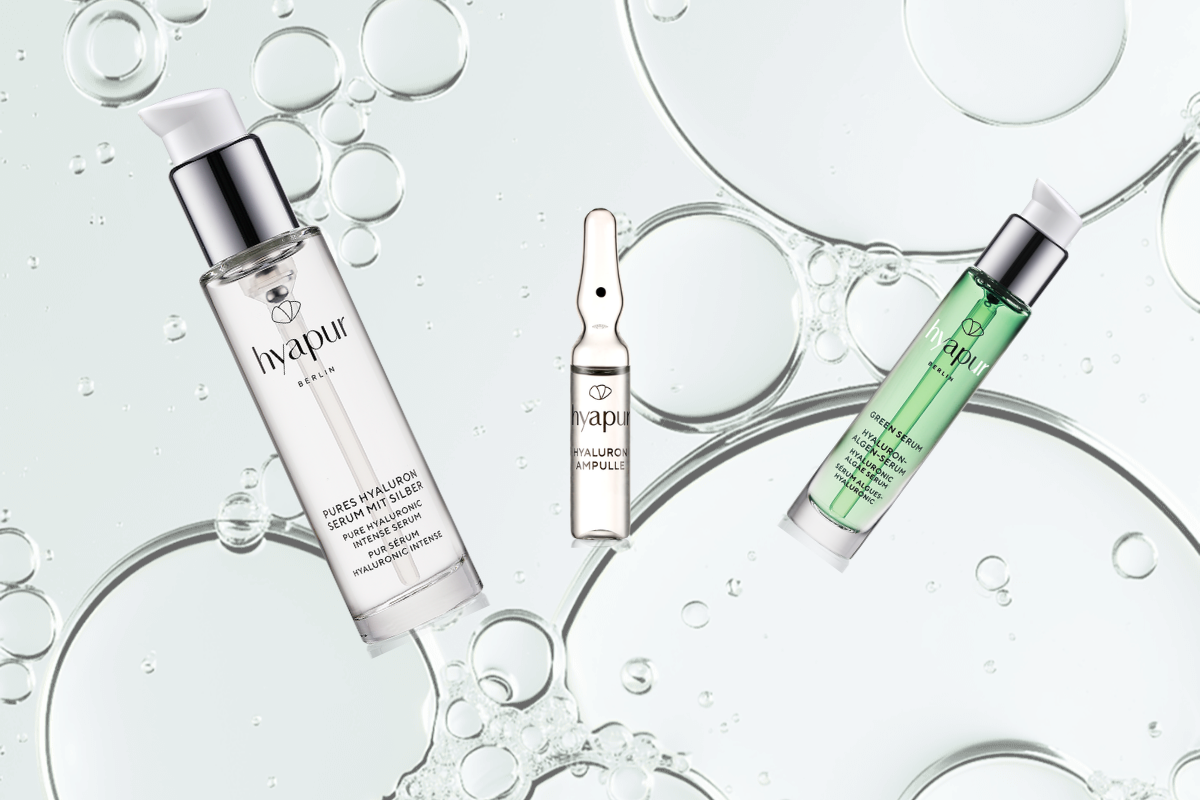
The hyapur® Pure Hyaluron Serum with Silver uses low-molecular hyaluronic acid. The formulation was deliberately kept minimalistic and consists of three ingredients:
- Aqua (purified water)
- Sodium Hyaluronate (salt of low-molecular hyaluronic acid)
- Silver (microsilver)
Each component fulfills a clear task in the recipe.
2. The Role of Concentration
Many products advertise particularly high hyaluronic acid concentrations. But it's not just the quantity that matters, but the formulation.
- The combination with other ingredients influences the effect
- a too high concentration makes a serum thick to sticky and impairs both spreadability and absorption
What is crucial is the serum's capacity to bind water. A well-formulated serum therefore relies on water binding, the reduction of interactions between active ingredients, and a balanced concentration.
A minimalist formula can be particularly interesting for sensitive skin, because it contains fewer ingredients that could potentially irritate. At the same time, this does not mean that more complex formulations are fundamentally worse. Ceramides, panthenol, niacinamide or other active ingredients can also be useful depending on the skin's needs. The question is not: "How many ingredients does a product contain?", but "Do the ingredients fulfill their task meaningfully?".
3. The Role of Quality
In addition to molecular size and concentration, quality also plays a central role. This includes:
- Origin and purity of the hyaluronic acid
- the manufacturing process
- and the stability of the formulation
High-quality serums often rely on biotechnologically produced hyaluronic acid and do without unnecessary additives.
Why should hyaluronic acid be applied to damp skin?
Hyaluronic acid binds water. Therefore, it feels particularly comfortable when moisture is already present.
A simple application:
- Cleanse skin.
- Leave face slightly damp or use toner.
- Apply 1-2 drops of hyaluronic acid serum.
- Gently pat in.
- Then apply cream or fluid.
The last step is important because the cream helps to keep the added moisture in the skin.
Can hyaluronic acid reduce wrinkles?
Hyaluronic acid cannot make deep wrinkles disappear, but it can make an important contribution to a more well-groomed complexion.
When dry skin is sufficiently moisturized, deep dehydration lines can appear less visible. The skin often appears smoother, plumper, and fresher.
This is also why hyaluronic acid is a popular component of healthy-aging routines. Not because it turns back time. But because it supports one of the fundamental functions of healthy skin: the ability to retain moisture.
Hyaluronic Acid as Part of a Skin-Barrier-First Routine:
Healthy skin needs several building blocks. It can be imagined as an interplay:
- Hyaluronic acid provides moisture.
- Barrier-strengthening care helps to retain moisture.
- Sun protection protects against external factors that accelerate skin aging.
- Targeted active ingredients can be used as a supplement.
Especially for dry or mature skin, this holistic view is crucial.
Hyaluronic Acid is one of the proven moisturizing active ingredients in skincare
Its strength lies not in solving as many skin problems as possible at once, but in supporting a central function of the skin:
Storing moisture.
A well-formulated hyaluronic acid serum can therefore be a valuable part of a minimalistic, thoughtful skincare routine.