
When we talk about skincare, moisture and active ingredients like hyaluronic acid are often the focus. However, an important component of healthy skin is often underestimated: lipids.
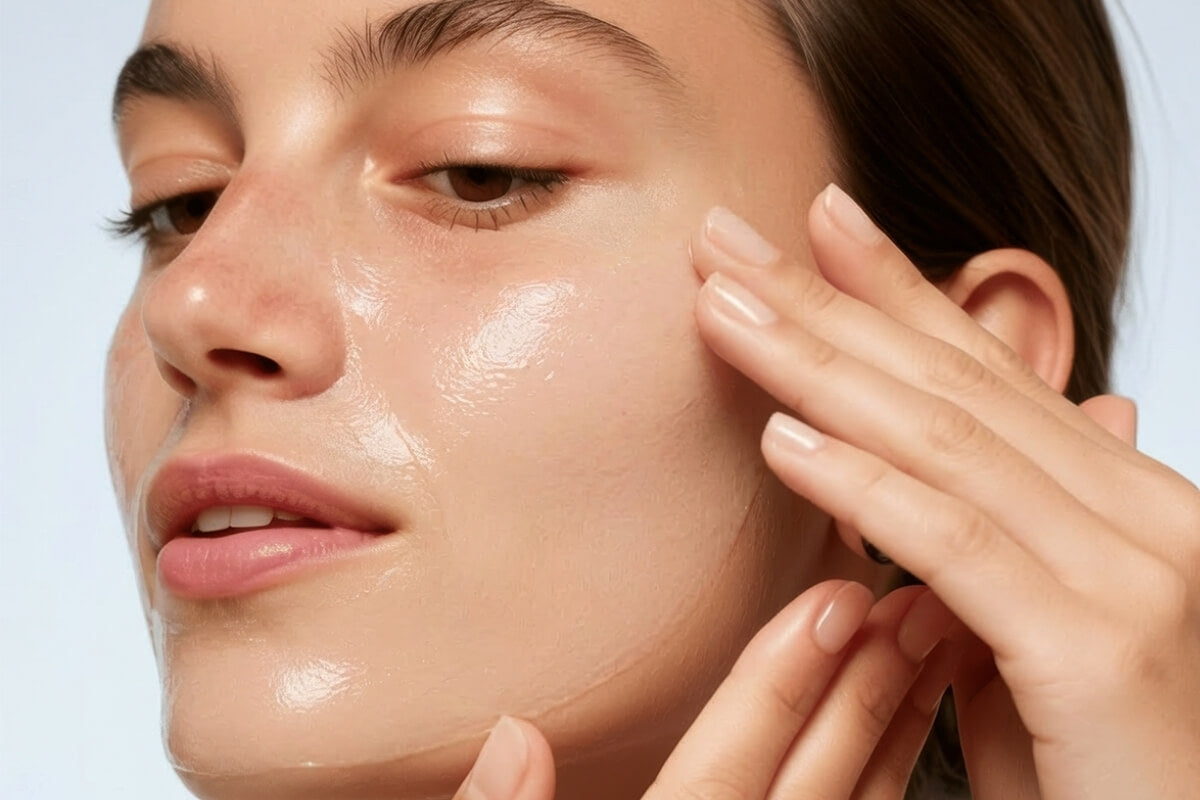
Lipids are a central building block of the skin barrier and help protect the skin from excessive moisture loss. Healthy skin therefore needs not only water, but also the right fats.
What exactly are lipids?
Lipids is the technical term for a large group of fat-like substances. In our skin, they perform various important tasks. Ceramides, free fatty acids, and cholesterol are particularly important for the skin barrier.What lipids do in the skin barrier
Many of us initially associate fat in skincare with an unpleasant, heavy feeling. However, high-quality lipids fulfill a completely different task:
They help the skin maintain its natural balance.
Dry skin, in particular, often doesn't just have a moisture problem. It often lacks the ability to adequately store this moisture. If the skin barrier is weakened, water can evaporate more quickly: the skin feels dry, tight, or rough.
Therefore, it's true: adding moisture and supporting the skin barrier go hand in hand.
Plant-based oils and fats: Natural lipids for skin care
Plant-based oils and fats contain different fatty acids and other natural active ingredients. Depending on the plant, they differ significantly in their composition and thus also in their properties.
Jojoba oil
Jojoba oil holds a special position in skin care. Although it is often referred to as an oil, it is chemically a liquid wax. Due to its composition, it resembles natural sebum and is therefore often used in care products that are intended to support a balanced skin feeling.
Almond oil
Almond oil is rich in unsaturated fatty acids and is traditionally valued for its emollient properties. It is often used in care products that are intended to support dry or sensitive skin.
Shea butter
Shea butter is one of the vegetable fats. It contains various fatty acids and nourishing components and is particularly used for rich formulations. Its strength lies primarily in giving dry skin a supple feel and supplementing the skin barrier with lipids.
Why lipids are particularly important for dry and mature skin
As we age, our skin changes. Among other things, the production of certain skin components slowly decreases, including lipids. As a result, the skin can become drier and less able to store moisture. Therefore, the supply of nourishing lipids plays an important role in the healthy aging concept. Not because oils rejuvenate the skin, but because a well-supported skin barrier is an important foundation for healthy-looking skin.
Lipids and Hyaluronic Acid: Two Different Functions
Moisture and fat are sometimes seen as opposites in skin care, but in reality, they complement each other:
- Hyaluronic acid helps the skin bind water
- Lipids help support the skin barrier and reduce moisture loss.
A good skincare routine therefore often needs both, moisture for hydration and lipids for occlusion.
Why the quality of the formulation is crucial
A plant oil alone does not make perfect skincare. The crucial factors are always
- the origin of the oil,
- which oil is used,
- in what concentration,
- with which other ingredients it is combined,
- for which skin type the formulation is intended.
This is precisely where the difference between a single active ingredient and a well-thought-out formulation becomes apparent.
These plant-based oils are in hyapur® products
At hyapur®, the focus is therefore not on the individual ingredient, but on the interplay of selected components.
For example, the GREEN series combines plant-based active ingredients such as aloe vera and pomegranate extract with high-molecular hyaluronic acid. Each product has its "own" plant-based oil, depending on the desired effect. Coconut oil is in the cleansing milk, shea butter in the eye cream, and a mixture of wheat germ, jojoba, and avocado oil in the day cream.
This way, the products help the skin achieve moisture and support the skin barrier of dry, mature, or stressed skin.