
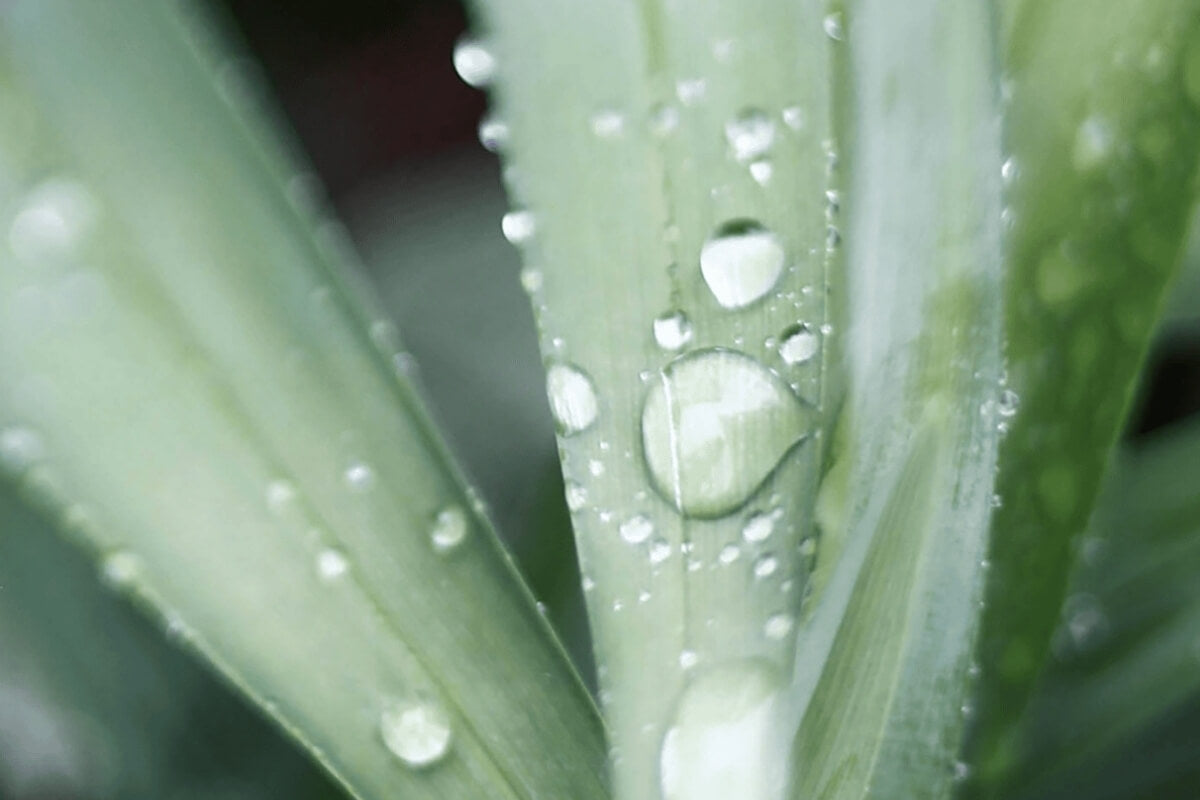
Few plants are as closely associated with skincare as aloe vera. For centuries, the plant has been valued for its special properties. Its clear gel, found inside the leaves and rich in water and various plant-based ingredients, is particularly well known.
Today, aloe vera is one of the most popular active ingredients in natural cosmetics. Not because of a single spectacular effect, but because it combines several properties. It can moisturize the skin, nourish it, and help it feel pleasantly supple.
What makes aloe vera so special?
Aloe vera is a succulent. This means that the plant can store water in its fleshy leaves, allowing it to survive extended periods of drought. This natural water storage makes aloe vera particularly interesting for skincare.
Inside the leaves is a clear, gel-like tissue. This plant sap consists largely of water. Its other components make it a versatile plant-based ingredient: it contains polysaccharides (complex sugars), valuable vitamins, minerals, enzymes, and amino acids, among other things.
It is important to distinguish between the clear leaf gel and the yellowish latex found directly beneath the leaf rind. In cosmetics, the clear gel from inside the leaf is primarily used.
Aloe vera plant sap: a natural nutrient complex
What makes aloe vera so interesting is the interplay of its various plant compounds. Although the plant sap consists of around 99% water, the remaining portion contains a wide variety of different ingredients.
These include, for example:
- Vitamins: Aloe vera contains vitamin A in the form of beta-carotene, as well as vitamin C and vitamin E. It may also contain various B vitamins.
- Minerals and trace elements: These include, for example, potassium, calcium, magnesium, zinc, and iron.
- Amino acids: The plant contains various amino acids, which are the natural building blocks of proteins.
- Polysaccharides: These long-chain sugar compounds, particularly so-called glucomannans, are characteristic of aloe vera gel. They contribute to its gel-like consistency and are important for its moisture-binding properties.
- Enzymes: Various enzymes are also natural components of aloe vera gel.
The exact composition may vary depending on the plant species, growing conditions, and processing. It is precisely the interplay of the different plant compounds that makes aloe vera a versatile ingredient for cosmetic care.
How aloe vera works on your skin
Aloe vera is primarily known for its moisturizing and nourishing properties. Three aspects in particular make it a popular component of daily skincare:
1. Supporting hydration
Aloe vera contains a high proportion of water and moisture-binding components such as polysaccharides. These can help the skin feel hydrated and supple. This makes aloe vera a useful addition, especially for dry or dehydrated skin.
It is important to note: like hyaluronic acid, aloe vera cannot provide complete skincare on its own. Providing moisture is only one part of a balanced skincare routine. The skin also needs an intact protective barrier to help retain moisture.
2. Nourishing and soothing the skin
Aloe vera is often used in products developed for sensitive or stressed skin. Its plant extract has traditionally been valued for its nourishing properties and can help the skin feel pleasantly soothed. This is why aloe vera is frequently used, especially after external stressors such as dry air, sun exposure, or environmental influences.
3. Supporting the skin's balance
Healthy skin is always the result of an interplay of various factors:
- sufficient moisture,
- an intact skin barrier,
- protection from external stressors.
Aloe vera can be a supportive building block in this process. However, it is not a substitute for other important components of skincare, such as lipids for the skin barrier or sunscreen to protect against UV radiation.
Aloe vera and hyaluronic acid: why this combination makes sense
Aloe vera and hyaluronic acid are often combined because both ingredients address the issue of moisture—albeit in different ways.
Hyaluronic acid can bind water, thereby supporting skin hydration.
Aloe vera complements this moisture care with plant-based ingredients and nourishing properties.
Together, they create a formulation that moisturizes the skin while also promoting a supple feel.
Aloe vera in the hyapur® GREEN Series
This exact combination of hyaluronic acid and aloe vera can be found in the hyapur® GREEN Series.
There, the two ingredients are combined with other selected plant-based components, including pomegranate and vitamin E.
The GREEN Series stands for mindful skincare with carefully selected ingredients. It moisturizes the skin, nourishes it, and helps it feel pleasantly supple.