

Hyaluronic Acid Face Cream: Effects, Selection, and Correct Application
A hyaluronic face cream is the entry point into moisturizing for most people, and at the same time, the product with which the most mistakes are made. Not because the creams are bad, but because hyaluronic acid functions differently in a cream than it does in a serum. Anyone who understands this needs fewer products and achieves better results.
On this page, you will learn what a hyaluronic face cream can achieve, how to recognize a good one, when day and night care make sense, and how to apply both so that the moisture actually stays in the skin.
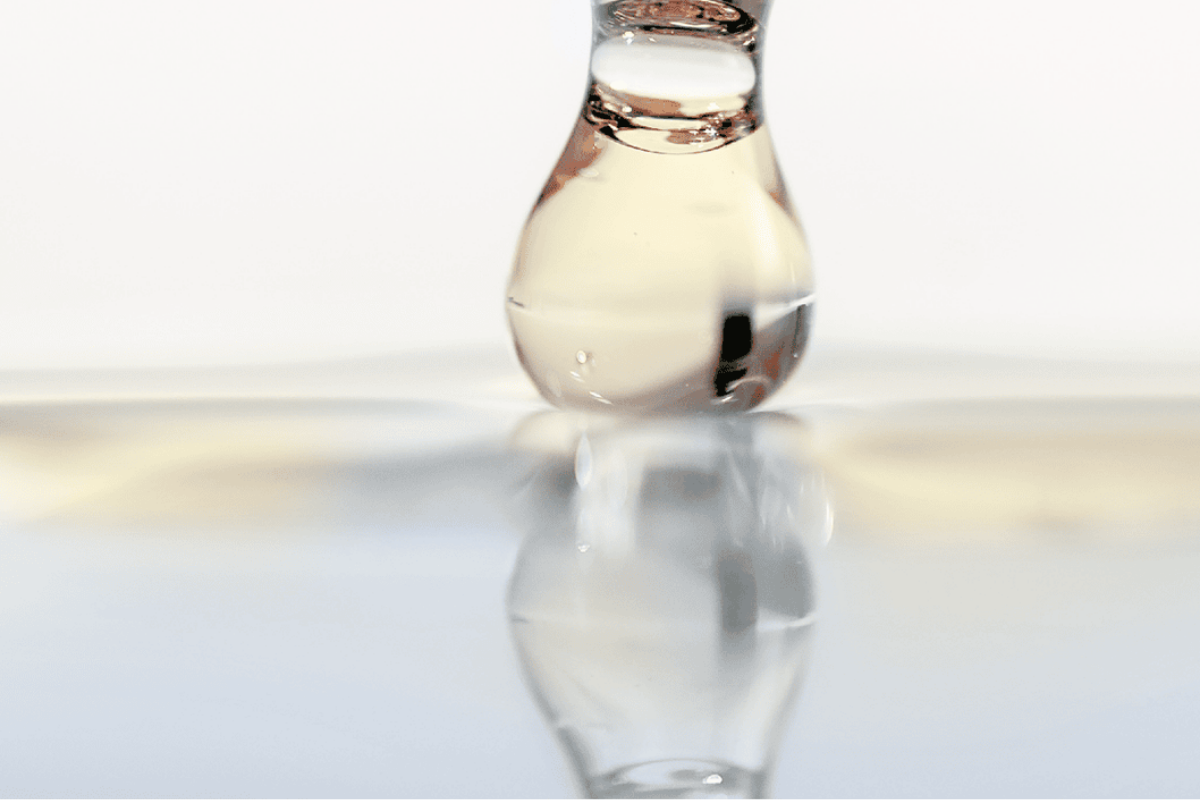
Hyaluron
is the amount of water hyaluronic acid can bind in relation to its own weight. Want to know more about this exciting active ingredient? Check out our hyaluronic acid guide.
01 What a hyaluronic acid face cream can do, and what it cannot
Hyaluronic acid is a molecule produced by the body itself. In healthy skin, it binds many times its own weight in water, keeping the upper layers of the skin plump and supple. Over the years, the body's own production decreases, which is why mature skin tends to look dry, dull, and less elastic more quickly.
A hyaluronic face cream addresses exactly this. It introduces moisture into the horny layer while simultaneously applying a nourishing lipid barrier on top to lock the water in. This interaction is crucial: hyaluronic acid alone attracts moisture, but evaporates again without a seal. Only the cream turns the boost of moisture into a condition that lasts for hours.
What a cream cannot do: fill in deep, structural wrinkles. Hyaluronic acid applied to the skin works in the horny layer, not in the dermis. The visible effect is a smoothed, plumped surface and a more even skin texture.
02 Cream or serum? The difference many overlook.
Serum and cream are not alternatives, but two steps with different functions.
The serum provides the active ingredient
A hyaluronic serum is watery to gel-like, specialized, and highly concentrated. It delivers a high quantity of hyaluronic acid, potentially in various molecular sizes, to the skin. Since hyaluronic acid is a water-soluble ingredient, it contains no fats in its pure form, absorbs quickly, binds moisture in the skin, but only retains this moisture to a limited extent.
The cream holds the active ingredient
A face cream contains oils, lipids, and usually other ingredients, such as antioxidants or other active agents. Emulsifiers are used to combine the oily and watery phases.
A cream seals and nourishes the skin barrier. This occurs primarily through the lipids (fats) it contains, which penetrate the stratum corneum and settle into the spaces between the cells. This effectively traps the moisture that has also penetrated the skin.
Therefore, if you apply a hyaluronic serum without a cream, some of the serum's effect is lost.
Practical rule:
If you only use one product, choose the cream. It can do a bit of both: provide moisture and lock it in.
If you use two, use the serum and then the cream in that order. Using two creams on top of each other, however, does little.
03 How to identify a good hyaluronic acid face cream
The INCI list
The list of ingredients is sorted by quantity. Sodium Hyaluronate in the final third is normal: hyaluronic acid is effective even in small amounts.
The accompanying ingredients
Hyaluronic acid in a cream needs partners. Plant oils provide lipids for the barrier, antioxidants such as vitamin E (tocopherol) protect against oxidative stress, and aloe vera adds moisture. What is special about natural cosmetics is that they use plant-derived lipids. These are very similar to human sebum. They are therefore able to absorb particularly well into the skin and, in addition to the necessary fat, provide the cells with energy, antioxidants, and vitamins.
04 Day cream and night cream: Do you actually need both?
Our skin has different tasks during the day and at night. During the day, it is primarily about protection and regulation, whereas at night it focuses on regeneration. Accordingly, the skin also has different needs at different times of the day.
During the day: protect and nourish
During the day, the skin is exposed to light, temperature changes, and environmental stress. A day cream can therefore be lighter and should contain antioxidants. It should be absorbed without leaving a shine and work well under make-up.
At night: repair
At night, cell regeneration is in full swing, and transepidermal water loss is at its highest. A night cream can be richer and contain more lipids. It does not need to be absorbed quickly. On the contrary, part of its effect comes from remaining on the skin for longer.
For those who only want to use one product, a day cream is more flexible. In the colder months, it may be sensible to use the richer night cream as a 24-hour treatment.
05 An overview of hyapur® hyaluronic creams and lotions
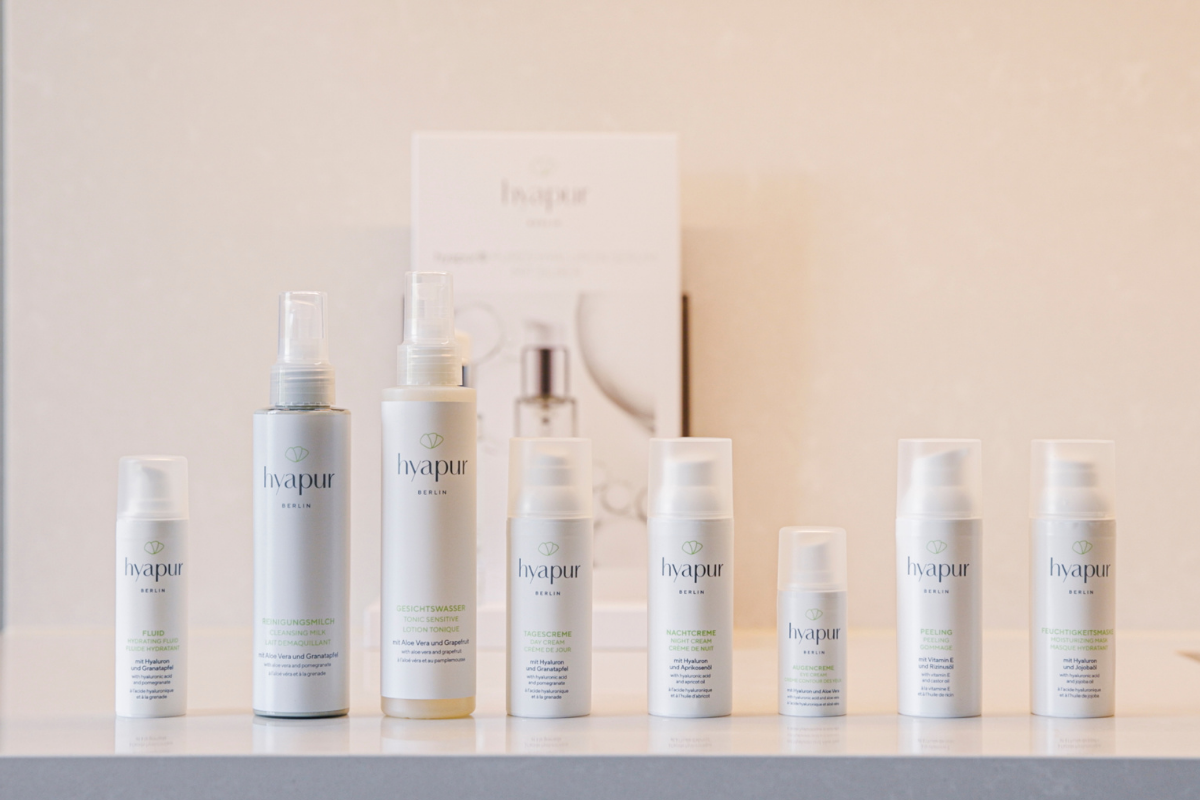
The fluid and creams from the hyapur® GREEN series combine high-molecular hyaluronic acid and cold-pressed organic oils from certified organic cultivation with aloe and pomegranate extracts. Vegan, silicone-free, made in Germany.
Discover the hyapur® GREEN series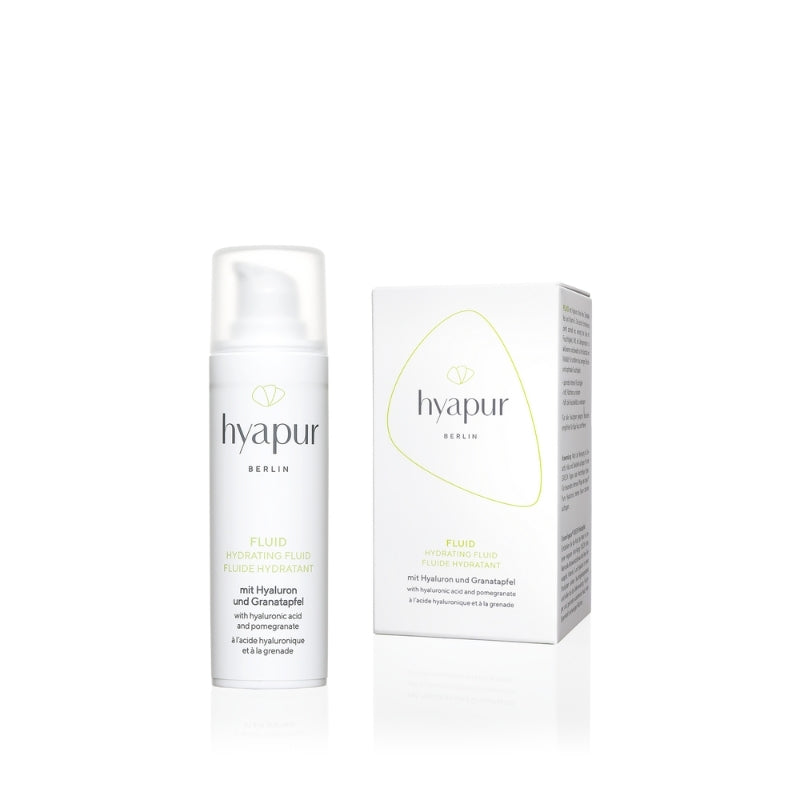
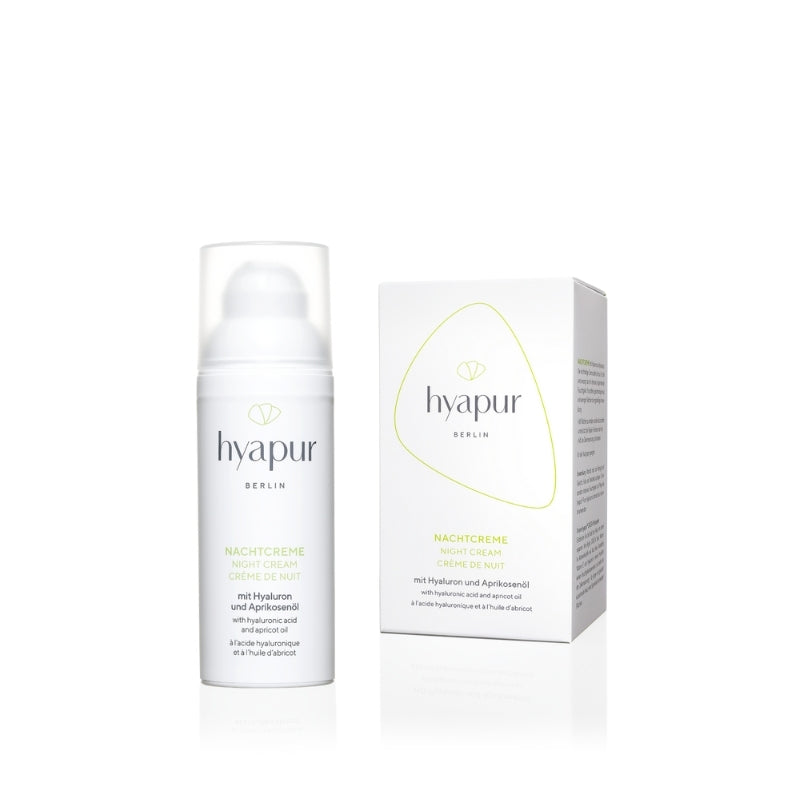
The light 24h care for oily skin, men's skin, and hot temperatures. Also ideal as a refreshing boost in between.
Seals in moisture and protects against environmental stressors during the day with vitamin E and pomegranate extract.
Supports the skin's nightly regeneration with hyaluronic acid and cold-pressed organic oils.
06 How to properly use Hyaluron Face Cream
Step 1: Clean
A gentle cleanser removes dirt, viruses, bacteria, and makeup without unbalancing the skin barrier. Overly aggressive surfactants cause essential lipids to be washed away.
Step 2: Tone
To remove soap residue and support the skin's pH balance, you can apply a facial toner after cleansing (and gently wipe it off with cotton pads).
Step 3: Apply serum
This is the most important and most overlooked point. Hyaluronic acid binds large amounts of water. If none is available, it draws moisture up from the deeper layers of the skin.
If you use a hyaluronic acid serum, you should therefore only pat your face dry after cleansing or using toner, rather than rubbing it dry.
Step 4: Apply cream
Work from the bottom up, from the neck to the temples, massaging in with gentle pressure. The neck ages faster than the face and is almost always forgotten.
Very important: keep at it
Especially with natural cosmetics and hyaluronic acid moisturizers, you won't see skin changes the next day. Since the active ingredients work with your skin, it usually takes at least one skin renewal cycle (4-6 weeks) before you can see the first changes.
07 Four mistakes that reduce the effectiveness of your cream
Applying to completely dry skin
The most common mistake with hyaluronic acid skin cream. The result is a feeling of tightness instead of moisture, which is often falsely blamed on the cream.
Too little or too much product
A hazelnut-sized amount is enough for the face and neck. Using more won't help it absorb better; instead, it will just leave a film on the skin.
Constantly switching products
The skin needs time to react to a formulation. Anyone who changes products every two weeks is never evaluating a result, but rather just a transition.
Viewing the cream as sun protection
About 80 percent of visible skin aging is caused by external factors, primarily UV radiation. A day cream with antioxidants provides support, but it does not replace sunscreen with an SPF.
08 Frequently Asked Questions about Hyaluronic Face Cream
From what age is a hyaluronic acid face cream recommended?
The skin's own hyaluronic acid content begins to decrease slowly from the mid-20s. A moisturizer with hyaluronic acid is therefore beneficial at any age. From around 40, and especially during and after menopause, it becomes essential because the skin then also loses lipids.
Do I need both serum and cream, or is one enough?
A good cream alone is better than nothing and sufficient for many. You get the most out of it with a combination: serum provides the concentration of active ingredients, while the cream keeps them in the skin.
At what age should I start using anti-wrinkle skincare?
The skin's hyaluronic acid content begins to decline from the mid-20s. The sooner a consistent moisturizing routine is established, the longer the barrier remains stable. Prevention is significantly more effective than later correction.
Is high-molecular-weight hyaluronic acid worse than low-molecular-weight hyaluronic acid?
No, it's different. High-molecular weight forms a moisture-binding film on the surface and provides an immediately visible smoothing effect. Low-molecular weight penetrates deeper and has a longer-lasting effect. Both high- and low-molecular weight hyaluronic acid can be used in a cream.
Can a hyaluronic acid cream remove wrinkles?
It can visibly reduce fine dehydration lines because it plumps up the skin. It does not alter deep wrinkles caused by facial expressions or loss of volume. Learn more on our page Hyaluronic Acid for Wrinkles.
Is a hyaluronic cream also suitable for oily or blemish-prone skin?
Yes. Oily skin is often dehydrated and therefore produces more sebum. A light, low-oil hyaluronic care product can break this cycle. It is important to avoid textures that are too rich.
Can I swap day and night cream?
That depends on your skin type and condition. In the colder months, the night cream can also be used in the morning. Conversely, using the day cream at night is possible, but it is less rich than what dry skin could benefit from at night.
How long until I see something?
An immediate effect through surface smoothing occurs within minutes. Improving elasticity and skin appearance requires at least two to four weeks of regular use.
Is the cream suitable for sensitive skin?
Hyaluronic acid itself is considered very well tolerated, as it is a natural component of the body. The rest of the formulation is decisive. In the case of known intolerance to certain allergens or essential fragrance components, it is worth taking a look at the INCI list.
Read more
Would you like to learn more about the role of hyaluronic acid in healthy aging?
Click here for our hyaluronic acid guides:
Hyaluronic acid: the active ingredient for your daily facial care
Find out here where hyaluronic acid comes from, how it is used, and what its effects are.
Hyaluronic Serum: Benefits, Application and Selection
Are you looking for a specific product? Find tips on how to choose here.
Eye care with hyaluronic acid
Learn the differences between serum, cream, and pads.
You can find more exciting topics on the blog:

Warum Hautpflege auch ein Ritual sein darf
Hautpflege beginnt mit der richtigen Reinigung, einer passenden Feuchtigkeitspflege oder einer Creme, die die Hautbarriere unterstützt. Doch sie kann noch etwas anderes sein: Ein kleiner Moment nu...
How often should you change your skincare routine?
On social media, it is often suggested that skin "gets used to" a cream if the same one is used for months. However, the truth is that our skin does not develop a habituation to skincare to this ex...
Sleep, Diet, and Stress: How They Affect Our Skin
Many of us primarily associate beautiful skin with the right skincare. Serums, creams, and active ingredients often take center stage. Yet, it is easy to forget that our skin is not an isolated organ.
hyapur® Berlin
Ready for your healthy-aging skincare with hyaluronic acid?
Feel free to take your time in the shop to see how hyapur® Berlin incorporates the active ingredient hyaluronic acid into its skincare and which product is suitable for your individual skincare routine.
Of course, we are also happy to advise you free of charge and without any obligation to purchase via email or phone.
About hyapur® Berlin

- Since 2009, the brand for premium hyaluronic cosmetics
- vegan, biotechnologically produced hyaluronic acid and natural formulations reduced to the essentials
- Quality Made in Germany

- over 1,000 delighted customers
- spa partner of the Mein Schiff® fleet, Hapag-Lloyd Cruises, selected ROBINSON clubs and 5-star hotels