

Natural cosmetics, organic cosmetics & organic oils: what lies behind the terms
"Natural cosmetics," "organic cosmetics," and "organic oils" are often used synonymously in everyday language, but they do not mean the same thing. Here, we explain what the terms really mean, how hyaluronic acid fits into natural cosmetic formulas, and what you can look for when buying.
01 What exactly is natural cosmetics?
Natural cosmetics refer to cosmetic products that are predominantly based on natural raw materials. However, the term "natural cosmetics" is not legally protected in Germany or the EU. Theoretically, any manufacturer can use it, regardless of the actual proportion of natural ingredients in the formula.
In practice, however, a common core has been established that guides genuine natural cosmetics:
Typical exclusion criteria for genuine natural cosmetics:
Avoidance of
- mineral oils
- silicones
- synthetic fragrances and colorants
- as well as controversial preservatives
Voluntary certifications such as NATRUE or COSMOS have become established on the market, which test according to their own, varying standards of strictness. Nevertheless, taking a look at the INCI list is always worthwhile, regardless of whether a seal is present.
02 Natural Cosmetics vs. Organic Cosmetics: Is there a difference?
For food products, "organic" is a legally protected term, regulated by the EU Organic Regulation. For cosmetics, there is no such uniform legal regulation. When "organic" is mentioned on cosmetic packaging, it usually refers to individual ingredients that come from controlled organic cultivation, not necessarily to the entire formulation.
NATURAL COSMETICS
The umbrella term
Refers to the type of raw materials (natural instead of synthetic) and the absence of certain additives, regardless of whether these raw materials were organically grown.
ORGANIC COSMETICS
The origin level
Additionally describes that some or all plant-based ingredients originate from controlled organic cultivation. "Organic cosmetics" is often used colloquially as a synonym for natural cosmetics.
In practice, both terms overlap significantly: good natural cosmetics usually focus specifically on ingredients from certified organic farming, without every single raw material necessarily having to be certified.
Hyaluron
is how much water hyaluronic acid can bind in relation to its own weight. Learn more about this fascinating active ingredient in our hyaluronic acid guide.
03 What makes a good organic oil?
Organic oils are vegetable oils that come from controlled organic cultivation, meaning they were grown without synthetic pesticides or fertilizers. However, a second factor plays an important role in their quality for skincare: the extraction method.
Cold-pressed: Gently extracted
Pressed without the application of heat, heat-sensitive vitamins, fatty acids, and secondary plant compounds are preserved in cold-pressed organic oils.
Sophisticated: Longer shelf life, fewer active ingredients
Refined vegetable oils are purified and deodorized through heat and chemical processes. In the process, some of their valuable nutrients are lost.
Cold-pressed organic oils are therefore considered particularly high-quality in natural cosmetics.
They support the skin barrier and cell regeneration without relying on synthetic additives.
04 Natural cosmetics with hyaluronic acid: How does that go together?
At first glance, hyaluronic acid seems like a foreign body in natural cosmetics. After all, it is a highly concentrated, lab-produced active ingredient.
The crucial point: modern hyaluronic acid for cosmetics is usually produced biotechnologically on a plant basis (glucose). This makes it vegan and easy to reconcile with the principles of natural cosmetics.
Combined with plant extracts such as aloe vera or pomegranate as well as cold-pressed organic oils, this creates a skincare product that unites the intensive moisture-binding properties of hyaluronic acid with the gentle, natural profile of classic natural cosmetics.
05 What to look out for when buying natural cosmetics
INCI list instead of advertising promises
An INCI list says more about the formulation than the claim "natural cosmetics" alone.
Origin of the oils and extracts
Certified organic farming and cold-pressed extraction ensure high quality.
Free from mineral oils and silicones
Both can form an occlusive film that impairs the natural function of the skin.
Vegan, if desired
Natural cosmetics are not automatically vegan, as ingredients such as propolis or carmine can also be used. A separate look at animal-derived ingredients is worthwhile.
Check out our hyaluronic acid guide.
06 Natural cosmetics in practice: the hyapur® GREEN series
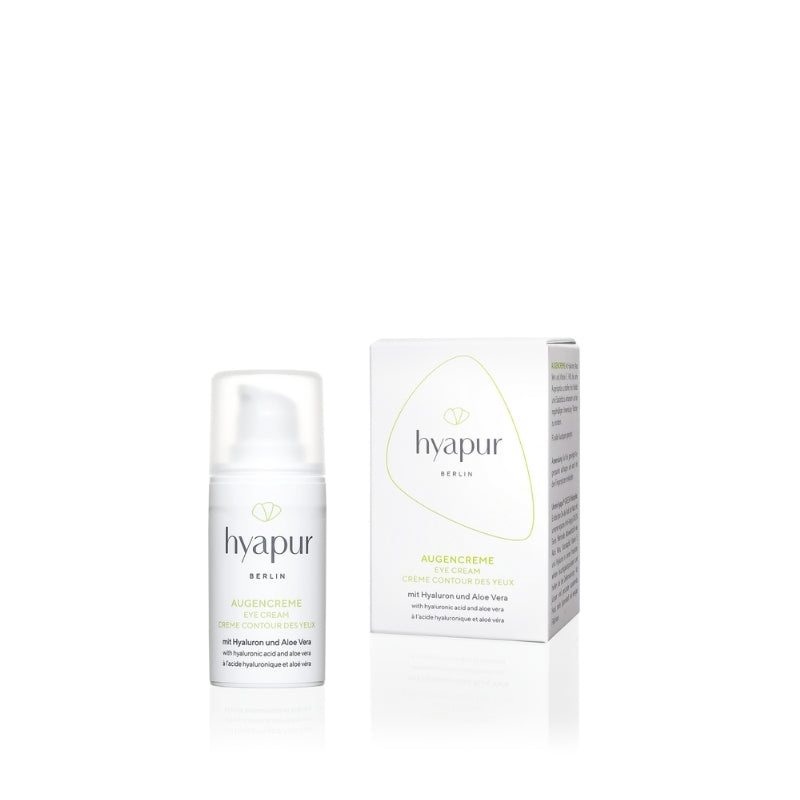
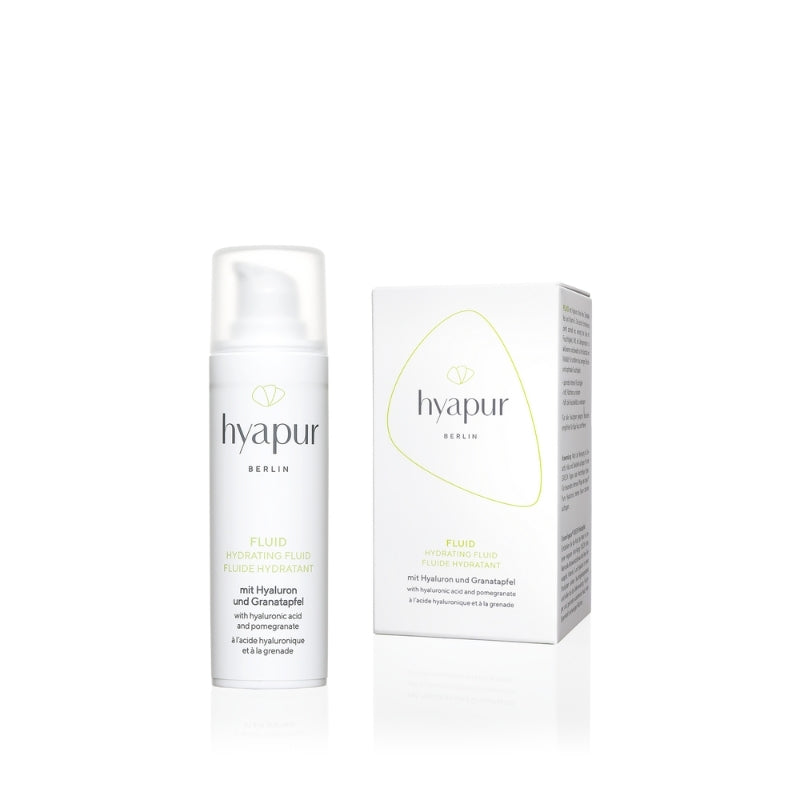
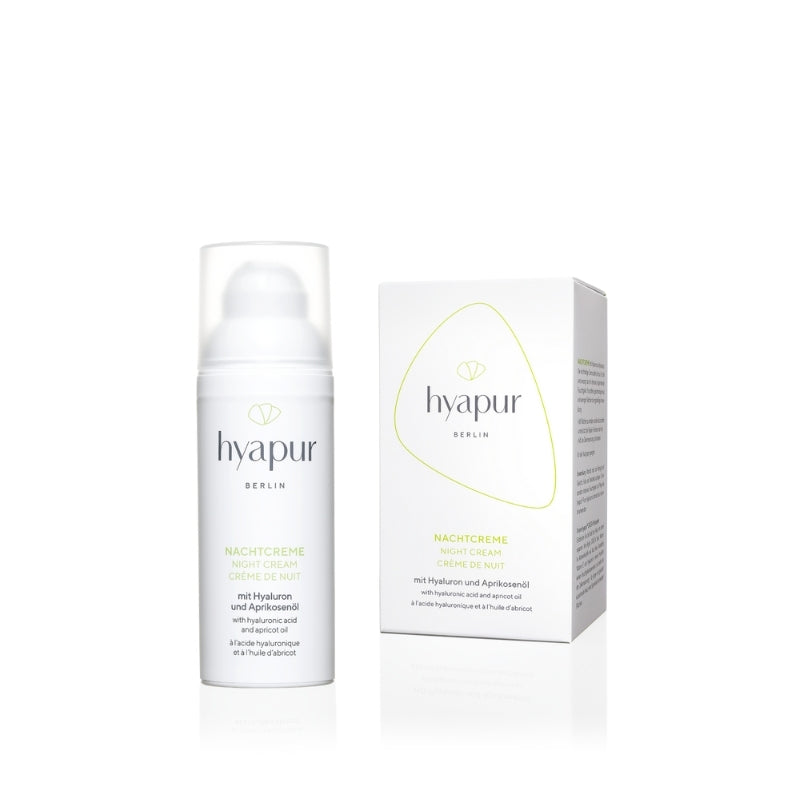
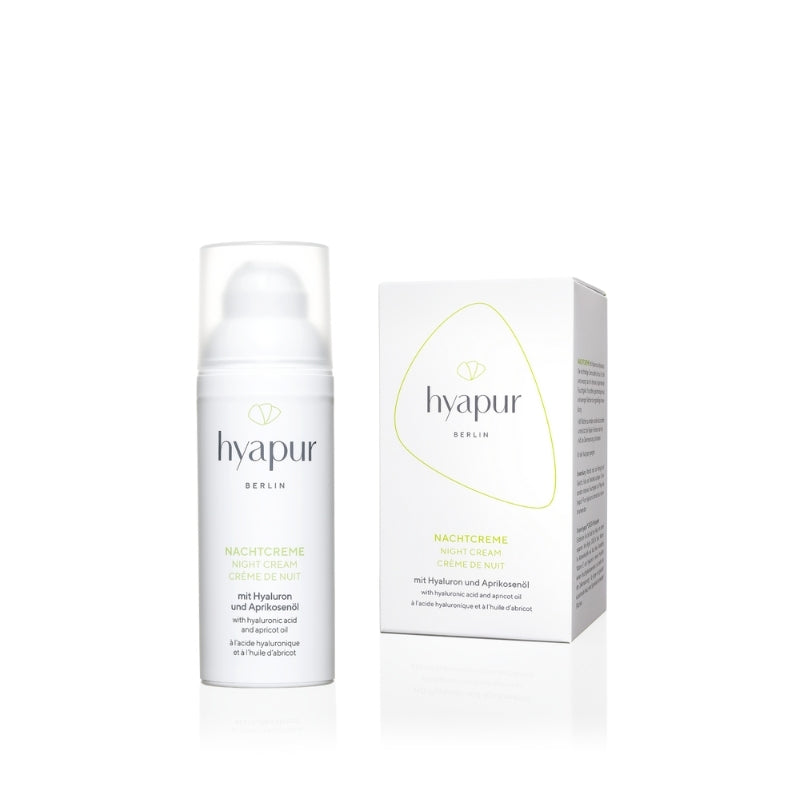
How the aforementioned principles can be implemented in an actual skincare line is demonstrated by our GREEN series: eight coordinated products that combine hyaluronic acid with aloe vera, pomegranate, and cold-pressed organic oils from certified organic cultivation: vegan, cruelty-free, and free from synthetic preservatives, fragrances, or colorants, mineral oils, or silicones. And, of course, produced in Germany.
Since the GREEN series does not contain any synthetic preservatives, opaque airless dispensers are used. This has several advantages: They are recyclable, reliably protect the formula from UV radiation and external contamination, are easy to transport, and dispense the product so precisely that not a single milliliter is wasted. This very absence of preservatives is also the reason why the shelf life after opening is limited to around six months. It is best to store opened products in a cool, dark place.
Customers regularly report that the GREEN series has a texture that absorbs quickly, is non-greasy, and leaves no sticky residue. Curious? You can find all eight products in detail in the hyapur® GREEN series.
The hyapur® GREEN series
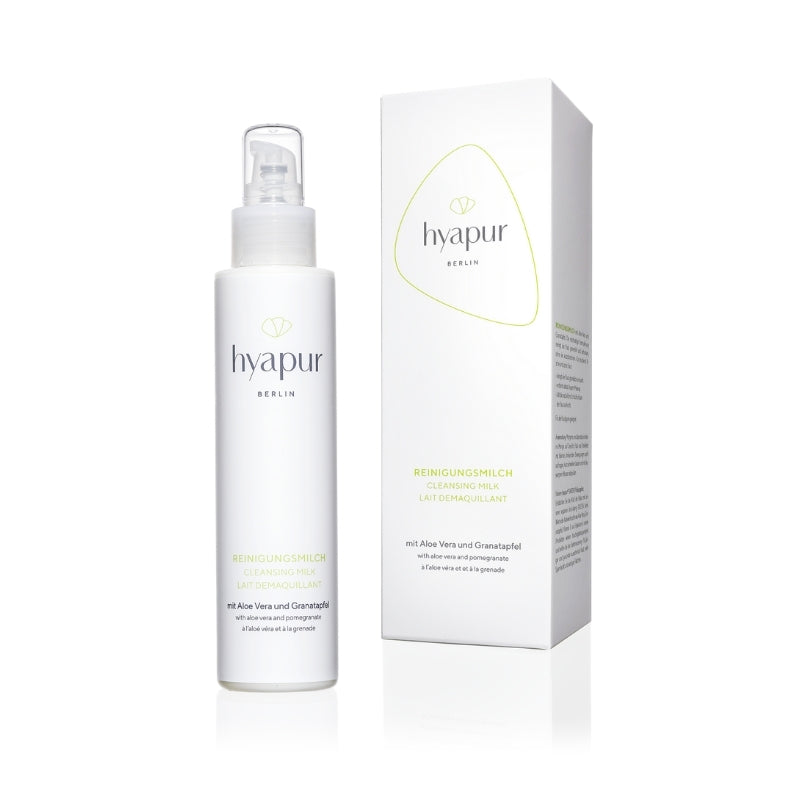
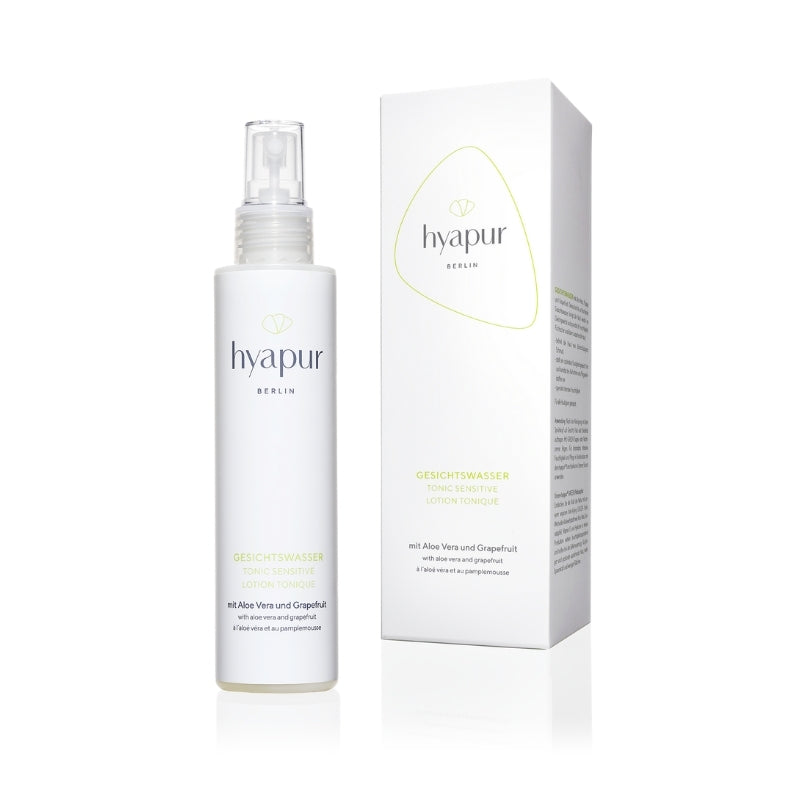
Gentle formula for naturally clear skin
Cream with shea butter and hyaluronic acid for radiant moments
07 A possible routine
Natural cosmetics unfold their effect primarily through regular use. One possible routine is:
1. Clean
Morning and evening with the cleansing milk.
2. Refresh
Apply toner to a cotton pad or directly to the skin.
3. Eye care
Gently tap the eye cream onto the eye area with your ring finger in the morning and/or evening.
4. Day or night care
Apply day cream or fluid in the morning depending on your skin type, and night cream in the evening.
Exfoliation
Use a scrub once a week for smooth, deep-cleansed skin.
Moisture Mask
Apply the moisturizing mask once a week after exfoliating or as needed and leave on for 15-20 minutes.
Frequently Asked Questions about Natural Cosmetics
08 Frequently Asked Questions about Natural and Organic Cosmetics
Is natural cosmetics automatically organic cosmetics?
Not necessarily. Natural cosmetics generally refer to cosmetics based on natural raw materials, without mineral oils, silicones, or synthetic additives. Strictly speaking, "organic" refers to the certified organic cultivation of individual ingredients, not a legally protected designation for the entire product as is the case with food.
What distinguishes organic oil from conventional vegetable oil in cosmetics?
An organic oil comes from certified organic farming without synthetic pesticides or fertilizers. It is usually gently cold-pressed, which preserves more valuable nutrients than in refined oils.
How does hyaluronic acid fit into natural cosmetics?
Modern hyaluronic acid for cosmetics is usually produced biotechnologically on a plant basis, entirely without animal raw materials. This makes it easy to reconcile with the principles of natural cosmetics.
Is there a standardized seal for natural cosmetics?
No, the term "natural cosmetics" is not legally protected in Germany or the EU. Voluntary certifications such as NATRUE or COSMOS have become established on the market, which evaluate products based on varying criteria of strictness. However, taking a look at the INCI list is always recommended.
Is natural cosmetics suitable for sensitive skin?
Usually yes, because plant-based ingredients in natural cosmetics are skin-identical and, for example, lipids from cold-pressed oils integrate optimally into the skin barrier and support its functions. However, this is no guarantee against intolerances, as natural fragrances such as essential oils can also have an irritant effect.
Can I combine natural cosmetics with other skincare products?
Yes, in principle, natural cosmetics can be well combined with other products. However, for sensitive skin or a routine that is as low-irritation as possible, it is advisable to use primarily products from a coordinated range in order to minimize interactions.
How quickly do results appear with natural cosmetics containing hyaluronic acid?
Many report an improved skin feel after just the first few applications. For visible, long-term effects such as the reduction of fine lines, consistent use over several weeks is recommended.
hyapur® Berlin
Ready for your new natural cosmetics routine?
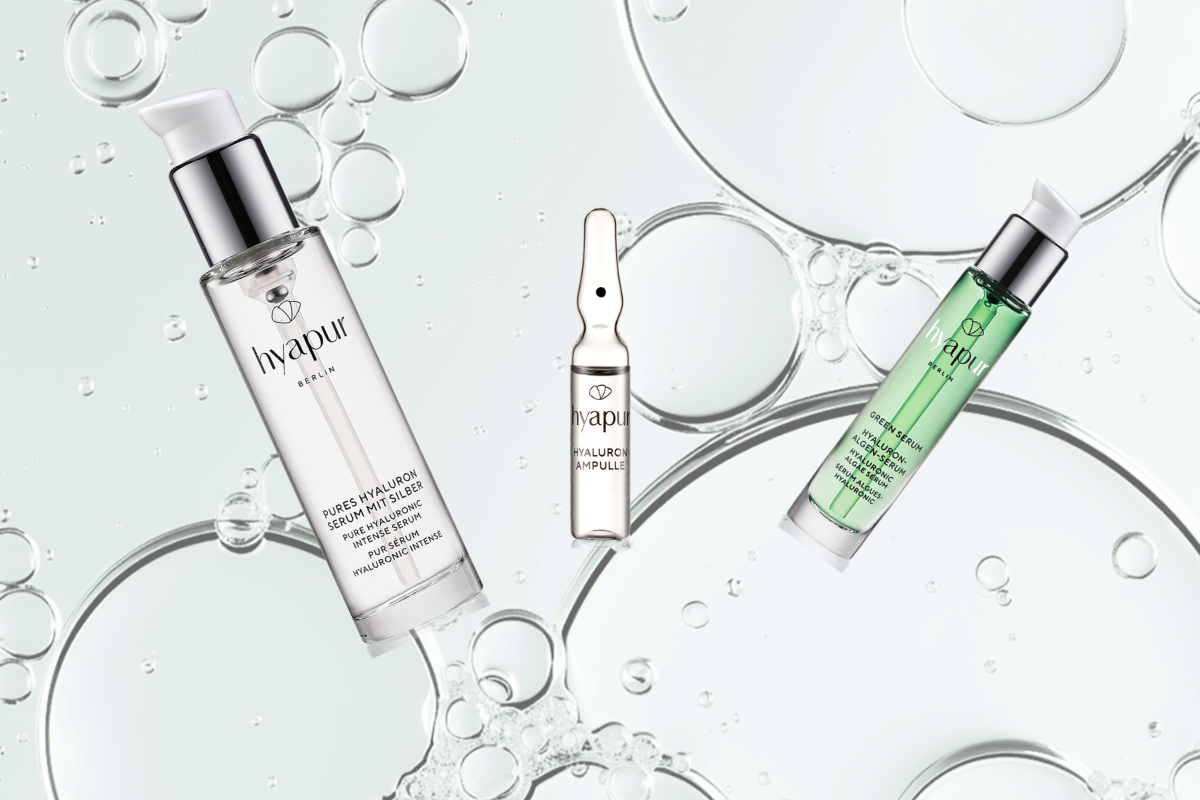
In our shop, you will find the GREEN Series, which is optimally designed for a natural, minimalist skincare routine. For an extra boost of moisture, the Pure Hyaluronic Serum with Silver can be ideally integrated.
About hyapur® Berlin

- Since 2009, the brand for premium hyaluronic cosmetics
- vegan, biotechnologically produced hyaluronic acid and natural formulations reduced to the essentials
- Quality Made in Germany

- over 1,000 delighted customers
- Spa partner of the Mein Schiff® fleet, Hapag-Lloyd Cruises, selected ROBINSON Clubs, and 5-star hotels