

Sodium Hyaluronate & Molecular Weight: High- vs. Low-Molecular-Weight Hyaluronan
Sodium hyaluronate, oligo, short-chain, long-chain, cross-linked, non-cross-linked, low or high molecular weight: anyone looking into hyaluronic acid will quickly encounter many different technical terms.
Behind almost all of them lies the same question: how long is the molecular chain, and what does that mean for its effect on the skin?
At hyapur® Berlin, we have been working with the active ingredient hyaluron for over 17 years and have built up corresponding expertise. This guide goes specifically into the depth of molecular sizes. For the basics of the active ingredient as a whole, we recommend our hyaluron guide, and for choosing the right product, our hyaluron serum guide.
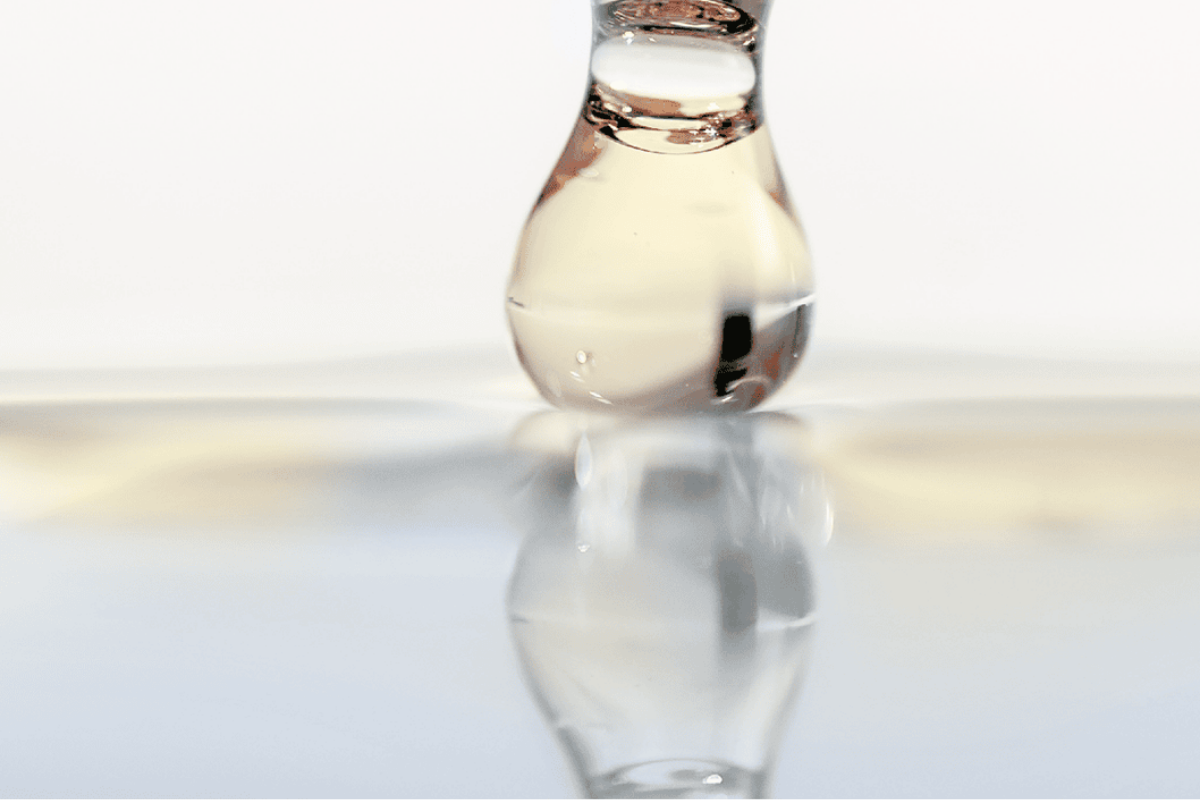
Hyaluron
is the amount of water hyaluronic acid can bind in relation to its own weight.
01 Sodium Hyaluronate: the technical term behind hyaluronic acid
On the INCI list, the internationally standardized nomenclature for cosmetic ingredients, hyaluronic acid almost never appears under that name, but rather as sodium hyaluronate, the sodium salt of hyaluronic acid. The reason: pure hyaluronic acid is poorly water-soluble. Its sodium salt, hyaluronate, on the other hand, dissolves very well in water and is therefore much easier to incorporate into creams, serums, and other cosmetic products.
In terms of their effect on the skin, hyaluronic acid and sodium hyaluronate barely differ, which is why both terms are often used synonymously in practice. More important than the question "acid or salt?" is almost always the question of molecular size.
02 What the molecular weight of hyaluronic acid means
Hyaluronic acid is a chain molecule consisting of many repeating sugar units. The more of these units are linked together, the longer the chain, and the higher the molecular weight.
This weight is measured in Daltons (Da) or kilodaltons (kDa, 1,000 Daltons).
Why this is important: The chain length is a decisive factor in whether a hyaluronic molecule can penetrate the skin or remains on the surface. And, consequently, how and where exactly it works. That is precisely why it is worth looking at the common terms regarding chain length in context.
03 The chain length scale at a glance
In cosmetics, a rough classification into three areas has become established. The exact limit values are not drawn entirely consistently in technical literature, but the following classification is a common guideline:
- Oligo / short-chain: under approx. 10 kDa
- Low molecular weight: approx. 10-1,500 kDa
- High molecular weight / long-chain: over approx. 1,500 kDa
"Short-chain" and "oligo" therefore mean the same thing: the smallest hyaluronic fragments. "Long-chain" is in turn another word for high molecular weight. Between these two poles lies low molecular weight hyaluronic acid, which often plays the main role in serums because it is fine enough to penetrate the skin, but long enough to bind moisture there.
04 High and low molecular weight hyaluronic acid in direct comparison
HIGH-MOLECULAR
Acts on the surface
The large molecules are too big to penetrate the skin. They remain on the skin's surface, where they form a fine, moisture-binding film and provide a visible smoothing effect.
LOW-MOLECULAR
Penetrates the skin
Smaller molecules can penetrate the top layers of the skin. There, they replenish moisture reservoirs from within and support the skin's structure over the long term.
High molecular weight (long-chain)
- Depth of penetration: remains on the skin surface
- Main effect: instantly visible smoothing effect / protective film
- Time horizon: Rather short-term, must be reapplied
- Skin feel: Light film, noticeable on the skin
- Typical in: creams, masks, high-molecular-weight serums
Low-molecular to oligo
- Penetration depth: Penetrates the upper skin layers
- Main effect: Deeper moisture retention
- Timeframe: Effect builds up over days / weeks
- Skin feel: Absorbs completely, no film residue
- Typical in: Fine-molecular serums, ampoules, concentrates
In practice, the two variants are not mutually exclusive. Many products intentionally combine multiple molecular sizes to achieve both an immediate and a deep-acting effect. For example, the hyaluronic acid in our Pure Hyaluronic Intense Serum is deliberately chosen to be low-molecular for better absorption, while our Hyaluronic Acid Ampoules combine high- and low-molecular hyaluronic acid for an immediate effect and optimal results when used as a treatment.
05 Connected vs. unconnected: an often overlooked difference
Beyond the pure chain length, there is a second important distinction, namely whether the hyaluronic acids are linked together (cross-linked) or present individually, i.e., non-cross-linked.
Cross-linked: For fillers, not for serums
Cross-linked hyaluronic acid forms a firm, gel-like network that is broken down significantly more slowly in the body. This form is primarily used in injectable fillers in aesthetic medicine. Anyone who comes across "cross-linked hyaluronic acid" in creams or serums online should therefore take a closer look, as medical treatment is required for injectable use.
Uncrosslinked: The basis for cosmetics
Uncrosslinked hyaluronic acid exists as individual, water-soluble chains. Cosmetics for external use, including our serums, rely almost exclusively on this form.
06 Acetylated Hyaluronic Acid
Acetylated hyaluronic acid is a chemically slightly modified variant: additional acetyl groups are attached to the molecular chain. This slows down the natural enzymatic degradation of the hyaluronic acid on the skin, allowing the moisture film to be maintained for longer than with unmodified hyaluronic acid.
This special form is found primarily in specialized, often higher-priced formulations. For most skin needs, a well-thought-out combination of high- and low-molecular, non-cross-linked hyaluronic acid already provides a very good result.
07 Frequently Asked Questions about Hyaluronic Acid Molecular Sizes
What is the difference between hyaluronic acid and sodium hyaluronate?
Hyaluronic acid is the acid form and is less water-soluble. Sodium hyaluronate is its salt, which dissolves significantly better in water and is therefore used in most cosmetic products. In terms of their effect, there is hardly any difference between the two.
What exactly is oligo-hyaluronic acid?
Oligo-hyaluronic acid is the shortest-chain form with a very low molecular weight, usually under 10 kilodaltons. Due to its small size, it can penetrate particularly deeply into the skin.
Is cross-linked hyaluronic acid contained in creams and serums?
Usually not. Cross-linked hyaluronic acid forms a firm gel and is primarily used for injectable fillers in aesthetic medicine. Cosmetics for topical application rely almost exclusively on non-cross-linked, water-soluble hyaluronic acid.
Which molecular size is best for my skin?
There is no such thing as the best molecule size. Low-molecular-weight hyaluronic acid tends to work in the upper skin layers, while high-molecular-weight hyaluronic acid tends to work on the surface. Many good products therefore specifically combine several molecule sizes with each other.
What does "fine-molecular cosmetics" mean?
This is colloquially used to refer to low-molecular-weight cosmetics, i.e., products with particularly small, easily absorbed active ingredient molecules such as low-molecular-weight or oligo hyaluronic acid.
Where can I find products with low-molecular or high-molecular hyaluronic acid?
In our hyaluronic acid serum guide, we present our portfolio of hyaluronic acid serums and ampoules and show which serum relies on which molecular size.
Read more: hyapur® skincare tips
Do you want to dive even deeper into the topic of hyaluronic acid and its role in healthy aging?
These articles explore the topic of hyaluronic acid in skincare from further perspectives:

Warum Hautpflege auch ein Ritual sein darf
Hautpflege beginnt mit der richtigen Reinigung, einer passenden Feuchtigkeitspflege oder einer Creme, die die Hautbarriere unterstützt. Doch sie kann noch etwas anderes sein: Ein kleiner Moment nu...
How often should you change your skincare routine?
On social media, it is often suggested that skin "gets used to" a cream if the same one is used for months. However, the truth is that our skin does not develop a habituation to skincare to this ex...

Sleep, Diet, and Stress: How They Affect Our Skin
Many of us primarily associate beautiful skin with the right skincare. Serums, creams, and active ingredients often take center stage. Yet, it is easy to forget that our skin is not an isolated organ.
hyapur® Berlin
Finding the right molecule size for your skin
In our serum guide, we show which molecular size is behind each hyapur® product.
Would you like to learn more about the active ingredient? Also read our hyaluronic acid guide.
About hyapur® Berlin

- Since 2009, the brand for premium hyaluronic acid cosmetics
- vegan, biotechnologically produced hyaluronic acid and natural formulations reduced to the essentials
- Quality Made in Germany

- over 1,000 satisfied customers
- Spa partner of the Mein Schiff® fleet, Hapag-Lloyd Cruises, selected ROBINSON Clubs and 5-star hotels