

Hyaluronic acid: effects, application & benefits
Hyaluronic acid is the moisture reservoir for your skin and one of the most important active ingredients for a plump, smooth complexion. You have surely heard of it already. Perhaps you are wondering where hyaluronic acid comes from and whether it is really right for your skin.
At hyapur® Berlin, we have been experts in this active ingredient for over 17 years. Below, you will gain some insights into this fascinating molecule and find answers to questions we hear frequently.
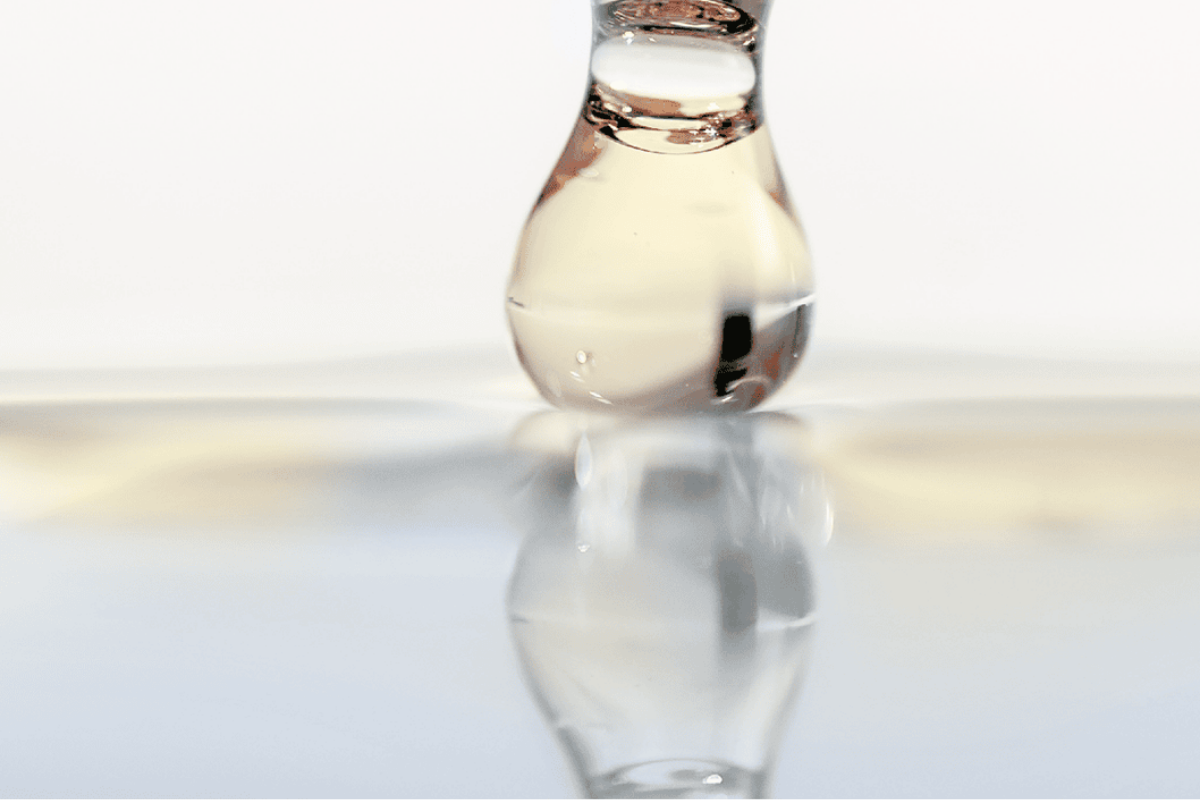
Hyaluron
is how much water hyaluronic acid can bind relative to its own weight.
Hyaluron, hyaluronic acid, sodium hyaluronate: one active ingredient, many names
01 What is hyaluronic acid?
Whether you are looking for "hyaluron", "hyaluronic acid", or "sodium hyaluronate": it always refers to the same active ingredient. But be careful: you usually cannot tell from the INCI list what molecular size it is.
Hyaluron is a polysaccharide (complex sugar) that is naturally produced by the body. It occurs in various forms in the skin, connective tissue, and synovial fluid, as well as in the vitreous humor of the eye. It ensures that everything remains supple.
Its special ability: hyaluron can bind very large amounts of water and store it like a sponge. From the mid-20s, the body produces less of it, and from around the age of 40, production drops noticeably again. As a result, the skin gradually loses moisture and glow. Since collagen production also falls and elastin decreases, the skin becomes thinner and less elastic. The first fine lines become visible.
Due to its positive properties, its low allergic potential as a substance produced by the body, and its effect as a humectant, hyaluron has become one of the most important active ingredients in the world of beauty and skincare. While skincare containing hyaluron cannot stop the natural skin aging process, it can support the skin's functions and provide more moisture, plumpness, and glow.
The active ingredient can be found in home bathrooms as a hyaluronic acid serum, in a cream, as an ampoule, or as a concentrate.
02 Where does the hyaluronic acid in skincare come from?
In the past, hyaluronic acid for cosmetics was often derived from animal tissue. Today, that is the exception. Most high-quality products, including those from hyapur® Berlin, rely on a biotechnological process. We obtain our hyaluronic acid from plant-based glucose. The result is vegan, very pure, and particularly skin-friendly.
When it comes to primary active ingredients, it is worth taking a closer look: whether a brand advertises "pharmaceutical quality," natural cosmetics, or a specific manufacturing process, or whether it uses high-molecular or low-molecular hyaluronic acid or a combination of both, often says more about the purity and tolerability of a hyaluronic acid product than the product name alone.
03 High-molecular & low-molecular: the decisive difference
Not all hyaluronic acid is the same. The size of the molecules is crucial, as it determines how the active ingredient works in your skin.
HIGH-MOLECULAR
Hyaluronic acid for the skin surface
Large hyaluronic acid molecules remain on the skin, binding moisture and providing a visual smoothing effect. Ideal for a visible, immediate result and a beauty-ready finish right after application.
LOW-MOLECULAR
Hyaluronic acid for deeper skin layers
Small hyaluronic acid molecules penetrate deeper into the skin, replenishing moisture reserves from within and strengthening the skin structure over the long term. The active ingredient behind lasting elasticity.
04 What exactly is hyaluronic acid good for in terms of the face and skin?
Hyaluronic acid for the face and skin is more versatile than almost any other beauty ingredient. It is particularly suitable for the face and skin when addressing these four issues:
- lack of moisture
- first fine lines & wrinkles
- loss of elasticity
- a tired complexion
Furthermore, it is suitable for almost all skin types, including sensitive, oily, combination, or blemish-prone skin. Hyaluronic acid is considered non-comedogenic, meaning it does not clog pores. For deeper, more pronounced wrinkles, it is also worth considering ingredients such as retinol or peptides. Hyaluron acts as a moisture booster, anti-aging aid, or care for sensitive skin.
Your skincare routine
05 How to apply hyaluronic acid to the face correctly
For the active ingredient to reach its full potential, the correct application is essential:
01 Apply to cleansed, slightly damp skin
First, cleanse the skin thoroughly and pat it dry gently. The skin should not be wet, but slightly damp, so that the hyaluronic acid can bind additional water and transport it into the skin.
02 Seal with a cream
Day or night care locks moisture into the skin.
03 Apply morning and evening
Hyaluronic acid is very well tolerated and is suitable for daily use twice a day. Initial effects such as a plumper skin feel and intense hydration are often noticeable immediately. A visibly smoother, better-hydrated complexion usually develops within 4-6 weeks of regular use.
04 Building a skincare routine
If you want to build your routine: A hyaluronic acid serum delivers the active ingredient in a concentrated form, while a light day cream or a rich night cream subsequently seals it in. For acute periods of dryness, a high-dose hyaluronic concentrate, for example in the form of ampoules, is also suitable as a treatment.
Frequently asked questions about hyaluron
06 Hyaluronic acid for face and skin: These are the questions we get asked most often as hyaluronic acid experts
What is hyaluronic acid and how does it work in skincare?
Hyaluronic acid is a body's own humectant that can bind large amounts of water. In skincare products, it helps to hydrate the skin intensively, (with regular use of its low-molecular form) makes it appear plumper, and visually smooths out fine lines.
What is hyaluronic acid derived from?
In the past, hyaluronic acid was often derived from animal sources. Today, it is mostly produced biotechnologically on a plant basis. hyapur® Berlin produces its hyaluronic salt biotechnologically based on plant-derived glucose. This makes it vegan and particularly skin-friendly.
When is hyaluronic acid the right choice for me?
If you are looking for intense hydration and a fresh complexion, hyaluronic acid is exactly the right active ingredient for you. In its low-molecular form, regular use helps to replenish your skin's natural moisture depots, promoting healthy aging and leaving your skin looking smoother and plumper. Hyaluronic acid can be used regardless of whether you are just starting out with skincare or want to expand your routine.
For which skin type is hyaluronic acid suitable?
Hyaluronic acid is suitable for all skin types, including sensitive, oily, combination, or acne-prone skin. It is non-comedogenic and therefore also well-suited for blemished skin. Even in cases of couperose or rosacea, pure hyaluronic serums are often suitable for providing the skin with intensive moisture. However, the use of skincare for existing skin conditions and known sensitivities should always be discussed with a dermatologist.
Is hyaluronic acid good for the skin?
Yes. Hyaluronic acid is the body's own moisture reservoir and is considered particularly well-tolerated in skincare. It provides intensive moisture, supports skin elasticity, and—unlike many pure "pharmaceutical" active ingredients—is also suitable for daily, long-term use.
How do I use hyaluronic acid correctly?
Best applied to cleansed, slightly damp skin; gently pat in and let absorb for about a minute. Follow with a moisturizer to seal it in. Ideal for use morning and evening.
Can hyaluronic acid be used daily?
Yes, hyaluronic acid is well tolerated and can generally be used twice daily. It is perfect for daily use in your skincare routine.
Can hyaluronic acid reduce wrinkles?
Hyaluronic acid cannot permanently remove wrinkles, but it can visibly soften them by making the skin appear plumper and better hydrated. For deeper wrinkles, ingredients such as retinol or peptides, which can boost collagen production, are additionally suitable.
When will I see the first results with hyaluronic acid?
This depends on the form of the hyaluronic acid and the product format. With a hyaluronic acid serum containing low-molecular-weight hyaluronic acid, the skin feels better hydrated and looks fresher immediately after application. However, initial improvements in skin texture are generally only visible after 4–6 weeks of regular use.
With a hyaluronic acid serum containing high-molecular-weight hyaluronic acid, the effects are usually noticeable immediately after application, and the skin appears plumper and more even.
Hyaluronic acid serum or cream with hyaluronic acid: Which is better?
Serums are the active ingredient boosters of your routine. Lightweight, concentrated, specialized, and designed for maximum effect. Creams, on the other hand, protect the skin barrier and lock in moisture. It is best to combine both: first a serum, then a cream, for the full power of hyaluronic acid.
What is the difference between a light and a rich hyaluronic day cream?
Many brands distinguish textures using terms such as "légère" (light) and "riche" (rich). At hyapur®, you will find this distinction in the form of our day cream for light, daily application and our night cream with a richer texture for overnight regeneration.
What does "Pharma-grade Hyaluronic Acid" mean and how does it differ from natural cosmetics?
"Pharma-grade Hyaluronic acid" usually refers to particularly pure hyaluronic acid products, often sold in pharmacies. Hyaluronic acid produced biotechnologically from plant-based glucose, as used in natural cosmetics, is in no way inferior to it in terms of purity and tolerability.
Is there a Stiftung Warentest winner among the hyaluronic acid products?
Test results from Stiftung Warentest always refer to individual products tested at a specific point in time and vary from test to test. In our view, a transparent formula and a molecular size that suits your skin's needs are more important than a single seal of approval – our team would be happy to advise you on this personally.
Can I combine hyaluronic acid on my face with cleansing foams or K-beauty products?
Yes. Regardless of whether you have used foaming cleansers, foam cleansers, or classic toners so far: Hyaluronic acid is easy to integrate into an existing routine. It is important to apply the active ingredient to slightly damp, cleansed skin and then seal it with a cream.
Read more: hyapur® skincare tips
Do you want to dive even deeper into the topic of hyaluronic acid and healthy aging?
Our hyaluronic acid experts have written further blog posts on active ingredients and skincare routines:

Warum Hautpflege auch ein Ritual sein darf
Hautpflege beginnt mit der richtigen Reinigung, einer passenden Feuchtigkeitspflege oder einer Creme, die die Hautbarriere unterstützt. Doch sie kann noch etwas anderes sein: Ein kleiner Moment nu...
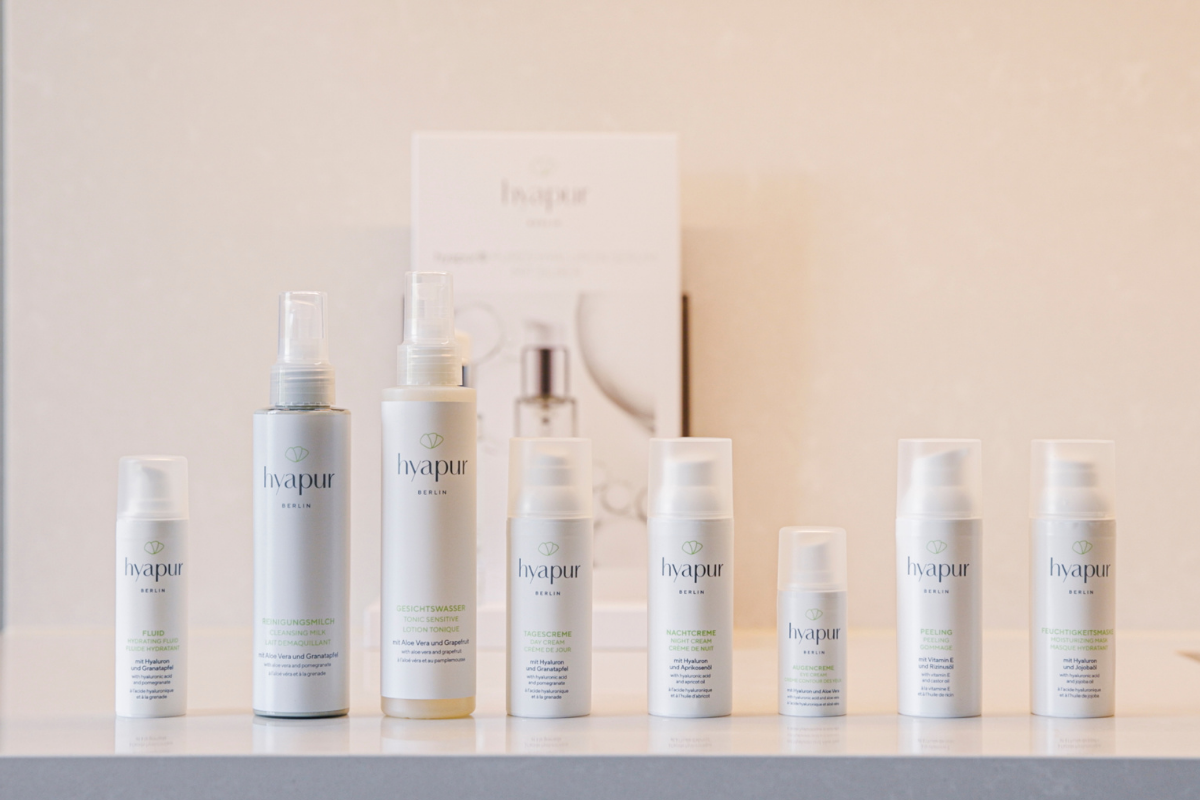
How often should you change your skincare routine?
On social media, it is often suggested that skin "gets used to" a cream if the same one is used for months. However, the truth is that our skin does not develop a habituation to skincare to this ex...
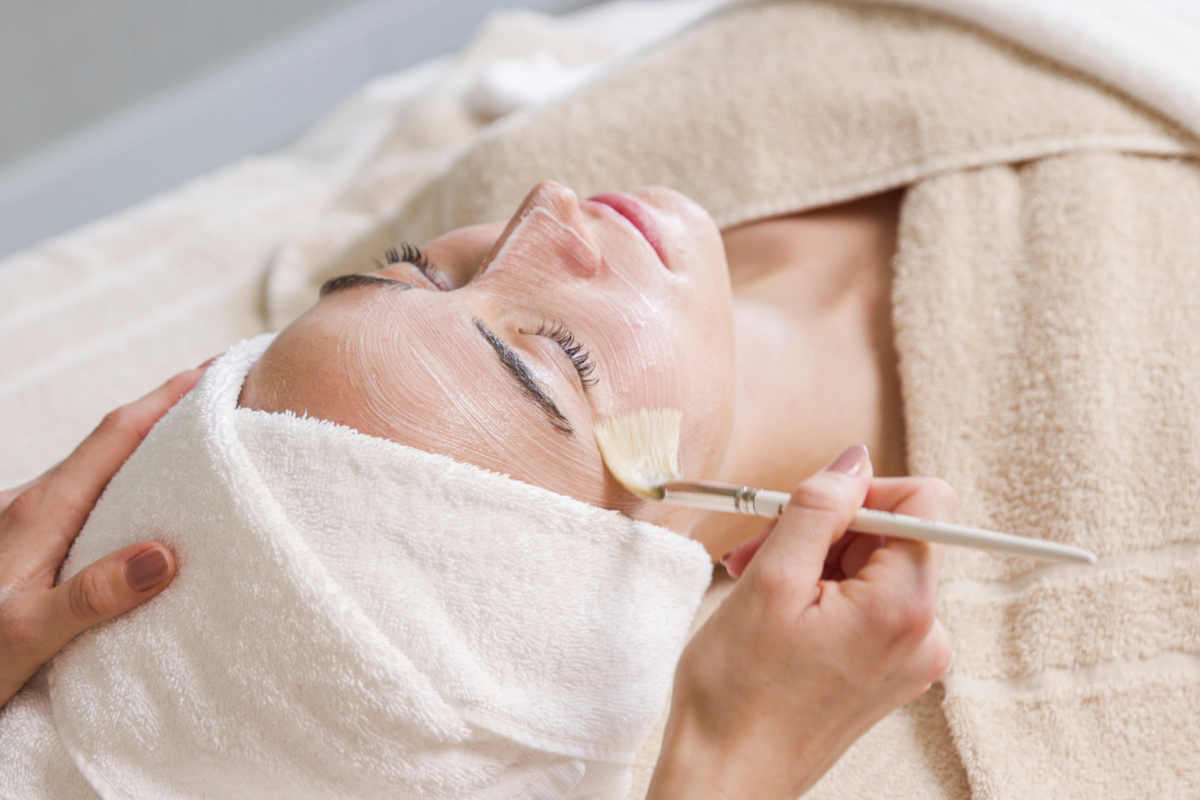
Sleep, Diet, and Stress: How They Affect Our Skin
Many of us primarily associate beautiful skin with the right skincare. Serums, creams, and active ingredients often take center stage. Yet, it is easy to forget that our skin is not an isolated organ.
hyapur® Berlin
Ready to try hyaluronic acid?
Below you will find a recommendation for a minimalist day and night care routine with hyaluronic acid.
If you like, feel free to browse the shop to see how hyapur® Berlin incorporates hyaluronic acid into its skincare.
Skincare routine with hyaluronic acid
01 Cleansing
Gentle facial cleanser to remove sweat, dirt, and sebum
02 Facial Toner
Revitalizing facial toner to remove soap residue and provide moisture.
03 Hyaluronic Serum
Highly concentrated hyaluronic acid as a moisture booster.
04 Hyaluronic Acid Skin Care
Light day cream or rich night cream to support your skin during the day or for regeneration while you sleep.
About hyapur® Berlin

- Since 2009, the brand for premium hyaluronic cosmetics
- vegan, biotechnologically produced hyaluronic acid and natural formulations reduced to the essentials
- Quality Made in Germany

- over 1,000 delighted customers
- spa partner of the Mein Schiff® fleet, Hapag-Lloyd Cruises, and selected ROBINSON Clubs and 5-star hotels