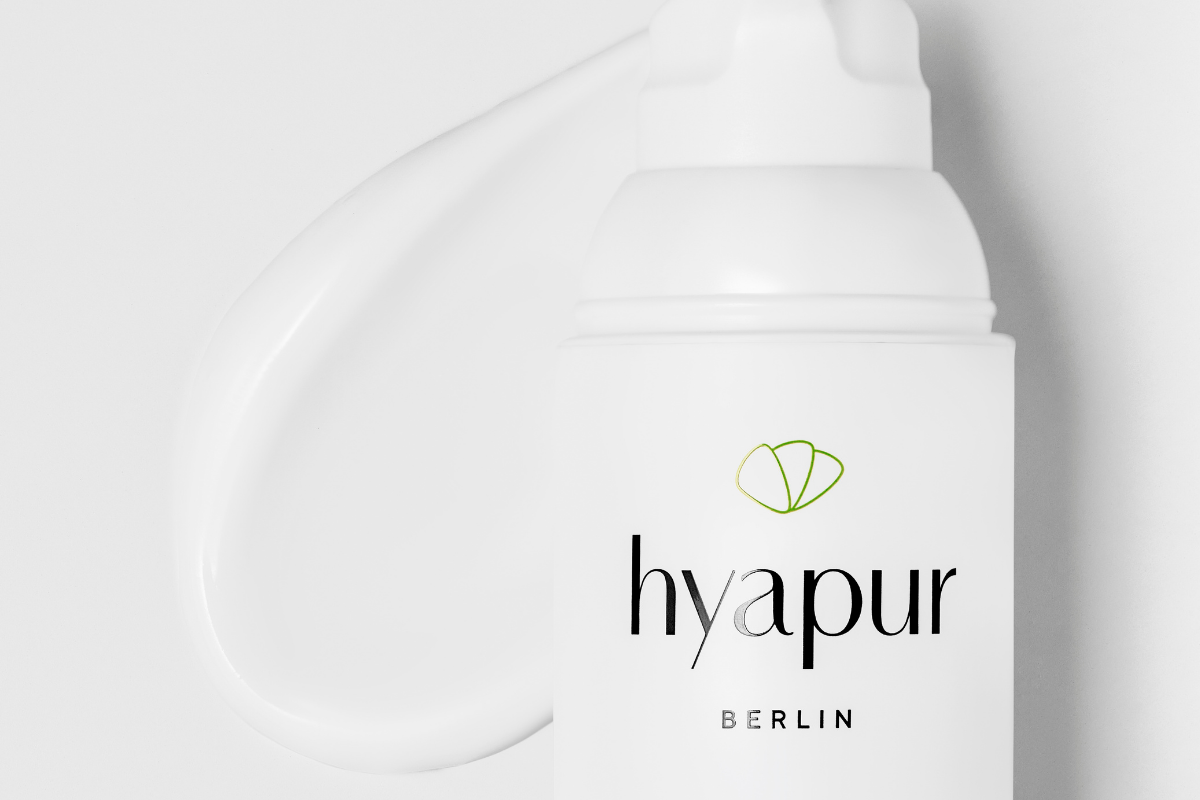

When you think of skincare, you often think of hydration first. But a well-formulated face cream can do much more than just supply the skin with water. It supports the skin barrier, protects against moisture loss, and helps the skin maintain its natural balance. You will learn here why this is so important and why hydration alone is often not enough.
Our skin needs more than water
You probably know the feeling too: your skin feels tight after cleansing, looks dry, or feels rough. The first thought is often: My skin needs more moisture.
This is often only partially true. Healthy skin needs not only water but also the ability to retain that water. This is exactly the difference between a hydrating serum that provides water and a face cream that locks it in.
The skin barrier, the skin's natural protective layer
The outermost layer of the skin, the so-called stratum corneum, is often compared to a brick wall. The skin cells form the "bricks," while lipids such as ceramides, cholesterol, and fatty acids act as the "mortar."
This skin barrier fulfills several functions:
- It protects against the penetration of irritants and environmental stressors.
- It helps retain water in the skin.
- It supports the natural balance of the skin microbiome.
- It helps keep the skin feeling pleasantly soft and supple.
When this barrier is intact, the skin remains resilient. If it is weakened, it can lose water more quickly and react more sensitively to external influences.
What hydration actually means
In skincare, the term "hydration" is often used. This primarily refers to water that is bound in the upper layers of the skin.
Humectants, known as moisturizers, attract water and help increase the skin's moisture content. The best-known examples include hyaluronic acid, glycerin, urea, and the so-called natural moisturizing factors (NMF).
Hyaluronic acid, in particular, is known for binding large amounts of water and giving the skin a plumper, smoother appearance. That is why it forms the basis of many hydrating serums.
But its job does not automatically end there.
Why hydration alone is often not enough
As mentioned at the beginning, many of us think that the skin simply needs water when it is dry. In fact, however, it loses moisture to the environment every day. This is a natural process known as transepidermal water loss (TEWL). As long as the skin barrier is healthy, this water loss remains low.
If the barrier is weakened, however, significantly more water escapes. The consequences can include feelings of tightness, dryness, or increased sensitivity.
While a serum with hyaluronic acid can bind water, it does not automatically prevent this water from evaporating again.
That is exactly why dermatologists often recommend applying a face cream after a hydrating serum.
The functions of a face cream
A well-formulated face cream complements hydration in several ways.
It reduces water loss
Lipids and nourishing oils form a fine protective film on the skin. This allows less water to evaporate.
It supports the skin barrier
Ingredients such as ceramides or free fatty acids are skin-identical and can help support the barrier.
It improves the feel of the skin
While serums are often lightweight and absorb quickly, a cream provides suppleness and a pleasant feel, especially for dry or mature skin.
Why the skin changes with age
Many people find that around the age of 40 or 45, their usual skincare is suddenly no longer sufficient. This is not because their previous products have become less effective. Rather, the skin itself changes.
As it ages, it loses water more easily and reacts more frequently to external influences. This is because
- the production of natural skin lipids,
- the amount of ceramides,
- the production of hyaluronic acid,
- sebum production,
- and the rate of skin renewal
all decline. This makes it particularly clear at this stage of life why hydration and barrier protection go hand in hand.
While cream provides more than just hydration, a boost in hydration is often needed from age 40 onward
While creams fulfill many functions, including caring for the skin, strengthening the skin barrier, and reducing transepidermal water loss, they may simply no longer provide enough moisture at a certain point.
A proven combination is a hyaluronic acid serum plus cream. The hyaluronic acid serum supplies the skin with moisture and supports hydration in the upper layers of the skin.
A cream then helps retain this moisture and supports the skin barrier.
This is especially true for dry or sensitive skin, where both product types complement each other effectively.
The correct order
A simple routine can already make a big difference:
- Gently cleanse the face.
- Apply the hyaluronic acid serum to slightly damp skin.
- Follow with a face cream.
- In the morning, finish with sunscreen.
This order helps the skin absorb moisture while remaining protected against water loss.
Fewer products, more targeted care
More is not always better. Sensitive skin, in particular, often benefits from a straightforward routine with a few carefully selected products. A minimalist hydrating serum can support hydration. A suitable cream or lotion complements the routine by strengthening the skin barrier and reducing water loss.
The success of a skincare routine therefore depends not on the number of products, but on how well it is tailored to the skin's needs.